
In 2026, a client website is not just a digital presence for your business, it is the powerhouse driving growth and deeper client engagement. With rapid shifts in technology and user expectations, having a future-ready strategy is essential.
This guide provides business owners and web professionals with a clear, actionable blueprint for building, optimizing, and maintaining a high-performing client website. You will learn how to plan for evolving needs, design with users at the center, leverage the latest technologies, and optimize for both search and conversions.
Stay ahead of digital trends, maximize your website’s ROI, and unlock practical strategies to set your business apart in the competitive online landscape.
Understanding the 2026 Client Website Landscape
In 2026, the client website is more than an online brochure. It must anticipate user needs, leverage technology, and adhere to evolving standards. To succeed, owners and web professionals need to understand the trends shaping the digital landscape.

Shifting User Expectations and Digital Behaviors
The modern client website must deliver speed, personalization, and seamless experiences across all channels. Users expect instant access, intuitive navigation, and content tailored to their interests. Mobile-first browsing dominates, with voice-driven search becoming mainstream.
Accessibility and inclusivity are now baseline requirements. As digital habits evolve, 85% of users abandon sites that take over 3 seconds to load. Consistency across touchpoints, from social media to email, is essential for building trust and engagement.
The Impact of AI, Automation, and Personalization
Artificial intelligence is transforming the client website into a smart, interactive platform. AI-powered chatbots offer instant support, while machine learning personalizes content for each visitor. Automated onboarding and support streamline the client journey.
Today, 70% of businesses rely on AI for website personalization, driving higher engagement and conversions. For deeper insights on these trends, see AI-Powered Personalization in Web Design. Enhanced lead capture and nurturing are now powered by predictive analytics, making every website interaction more relevant.
Privacy, Security, and Compliance Trends
Privacy and security are top priorities for every client website. Regulations like GDPR and CCPA set strict standards for data handling. Encryption, multi-factor authentication, and secure client portals are essential features.
With 60% of users avoiding businesses with weak privacy practices, future-proof compliance is vital. Steps include regular audits, transparent data policies, and ongoing staff training. Secure sites foster trust and protect both business and client interests.
The Role of Sustainability and Ethical Web Practices
A sustainable client website appeals to both users and search engines. Eco-friendly hosting and green web design reduce environmental impact. Ethical data handling, transparency, and clear privacy policies are now standard.
Sustainable websites enjoy 20% higher trust scores from clients. Responsible practices not only comply with regulations but also enhance brand reputation. Demonstrating social responsibility is a competitive advantage in the digital marketplace.
Competitive Benchmarking for 2026
To build a high-performing client website, study the leaders in your industry. Analyze engagement rates, conversion rates, and bounce rates to identify what works. Use tools like heatmaps and analytics dashboards for competitor analysis.
The top 10% of client websites convert at twice the industry average. Regular benchmarking helps you set realistic targets and uncover new opportunities for growth. Staying informed keeps your website ahead of the curve.
Step 1: Strategic Planning for a Future-Ready Client Website
A successful client website in 2026 starts with a solid strategic foundation. Planning thoughtfully ensures your digital presence is aligned with evolving business goals and user expectations. This step is about building a future-ready site that adapts, grows, and delivers measurable value.
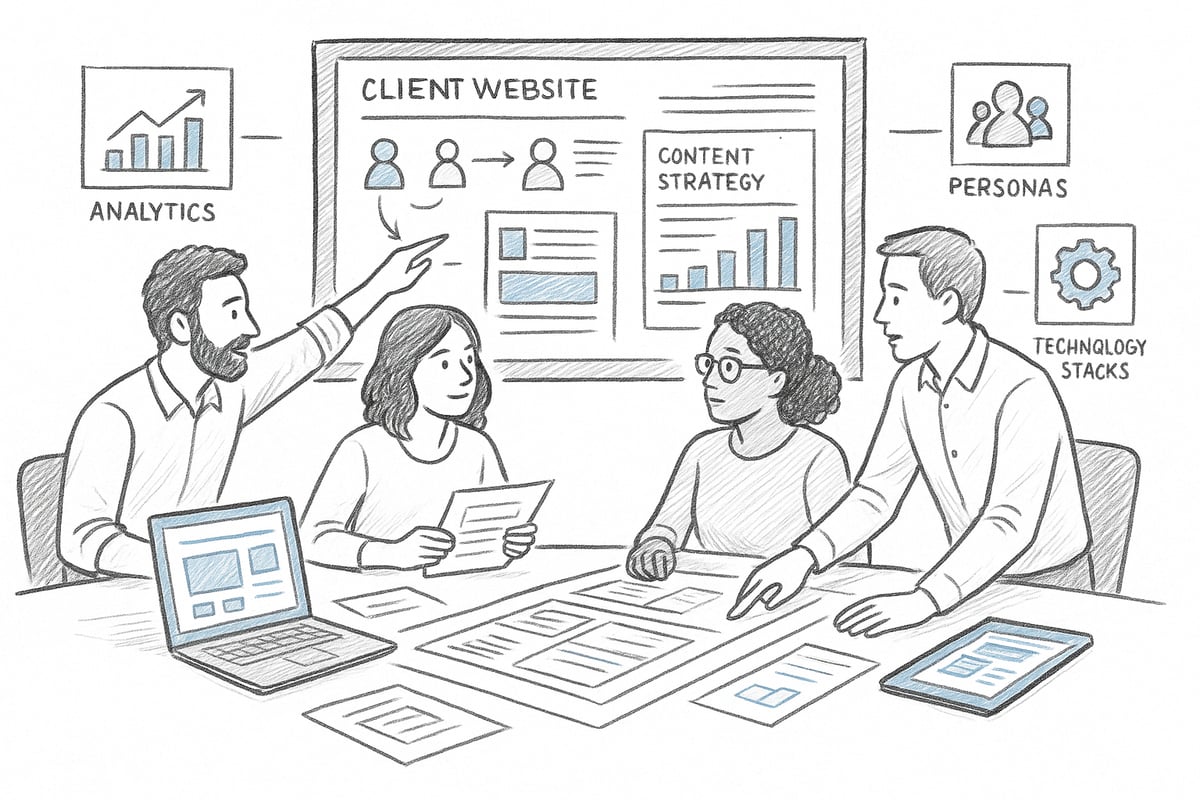
Defining Clear Business Goals and User Personas
Start by aligning your client website objectives with your overall business growth targets. What are you aiming to achieve—lead generation, client retention, or brand authority? Mapping out user journeys for each target persona helps you understand their needs and behaviors.
- Create detailed personas for key client segments.
- Visualize user flows from entry to conversion.
- Prioritize features that solve real client problems.
For example, persona-driven design can increase engagement by 30 percent. By understanding your audience, your client website will deliver tailored experiences that drive results.
Content Strategy for 2026: Value, Authority, and Engagement
A future-ready client website requires a content strategy that balances evergreen value, authority, and interactivity. Focus on creating content that answers client questions, showcases expertise, and encourages engagement.
- Use a mix of articles, videos, and interactive tools.
- Publish expert insights and case studies to build trust.
- Implement interactive elements like quizzes or calculators.
Video content alone can boost dwell time by 50 percent. Build a content calendar that addresses every stage of the client journey. This approach positions your client website as a go-to resource, fostering lasting relationships.
Selecting the Right Technology Stack and Platforms
Choosing the right technology stack is crucial for your client website’s scalability and flexibility. Evaluate CMS options, hosting, and integrations that support growth. Decide between no-code platforms or custom development based on your team's skills and needs.
- Compare headless vs. traditional CMS options.
- Assess integrations for marketing, analytics, and client management.
- Ensure your solutions are industry-appropriate.
According to recent data, 65 percent of businesses now use headless CMS for added flexibility. For industry-specific approaches to technology and platform choices, see how different sectors address these needs in Industries We Serve for Client Sites.
Budgeting and Resource Allocation
Strategic budgeting is vital for a high-performing client website. Allocate funds for design, development, ongoing maintenance, and optimization. Use ROI-driven decision-making to maximize the impact of every dollar.
- Prioritize features that deliver measurable returns.
- Plan for ongoing content updates and technical support.
- Track spending against key performance indicators.
Ongoing optimization yields 20 percent higher ROI than one-off builds. A clear budget ensures your client website remains competitive and adaptable as your business scales.
Project Management and Stakeholder Collaboration
Effective project management ensures your client website launches on time and meets expectations. Use agile methodologies to keep projects flexible and responsive to change. Foster open communication among clients, designers, and developers.
- Break work into manageable sprints.
- Hold regular check-ins and feedback sessions.
- Document decisions for transparency.
Agile-led projects deliver 30 percent faster go-to-market. With strong collaboration, your team can resolve issues quickly, adapt to feedback, and launch a client website that stands out in 2026.
Step 2: Designing for User Experience and Conversion in 2026
Creating a high-performing client website in 2026 is about more than aesthetics. Every design choice must enhance user experience and drive measurable results. Let’s explore the essential elements shaping modern client website success.
UX/UI Principles for Modern Client Websites
In 2026, UX and UI are the foundation of every effective client website. Minimalist layouts, clear navigation, and engaging micro-interactions create a seamless experience. Prioritizing accessibility is vital, with WCAG 3.0 compliance ensuring everyone can use your site comfortably.
Consider using subtle animations and bold, legible typography. Micro-interactions, such as hover effects and animated buttons, keep users engaged without distraction. For a deeper look at emerging styles, Web Design Trends 2026 highlights the rise of freehand illustrations and interactive elements that bring client websites to life.
Omnichannel consistency is also essential. Every touchpoint, whether desktop or mobile, should deliver the same high-quality experience. A strong focus on UX/UI elevates your client website above the competition.
Personalization and Dynamic Content Delivery
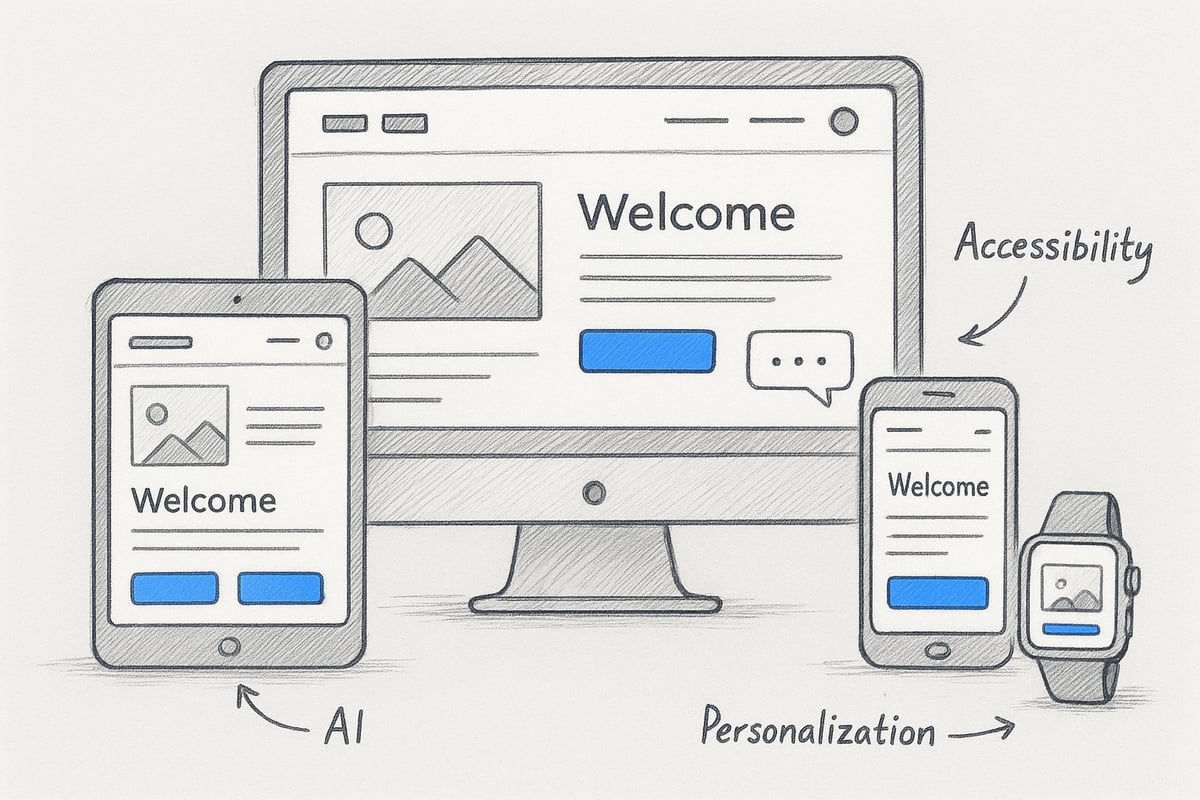
Personalization is no longer optional for a client website. Real-time content adaptation, powered by AI, tailors the site to each visitor’s preferences. This approach increases engagement by serving relevant information, offers, or calls to action precisely when users need them.
AI-driven recommendations and dynamic CTAs help nurture leads and guide them through the client journey. Machine learning analyzes behavior in real time, optimizing the experience for every user. Personalization transforms a standard client website into a powerful, conversion-focused platform.
Mobile-First and Multi-Device Optimization
With users accessing client websites from smartphones, tablets, and wearables, mobile-first design is essential. Responsive layouts adapt fluidly to any screen size, ensuring content is always readable and accessible.
Optimizing mobile page speed is critical. Techniques like image compression, lazy loading, and AMP (Accelerated Mobile Pages) keep load times under three seconds. A client website that performs well on all devices not only meets user expectations but also drives 70% more engagement.
Visual Storytelling and Brand Consistency
A cohesive visual identity builds trust and recognition for your client website. Use a harmonious color palette, consistent typography, and high-quality imagery to reinforce your brand’s story. Every visual element should work together to communicate your message clearly.
Integrate your brand story into the design, using graphics and icons that reflect your mission and values. Strong visual branding increases recall by 60%, making your client website memorable and distinctive in a crowded digital landscape.
Conversion-Centered Design Elements
Every client website should be built with conversion in mind. High-impact landing pages, streamlined forms, and bold calls to action guide visitors toward your business goals. Social proof, such as testimonials, ratings, and trust badges, alleviates doubts and builds credibility.
Consider a table summarizing key conversion elements:
| Element | Impact on Conversion |
|---|---|
| Reviews | +34% |
| Trust Badges | +20% |
| Optimized Forms | +28% |
Implementing these strategies ensures your client website turns visitors into loyal clients.
Usability Testing and Continuous Improvement
Ongoing usability testing is essential for optimizing your client website. Use A/B testing, heatmaps, and direct user feedback to uncover areas for improvement. Analytics reveal how users interact with your site, guiding iterative design updates.
Regular testing and refinement ensure your client website continues to exceed expectations. This process not only boosts conversion rates by 25% but also keeps your site aligned with evolving user needs.
Step 3: Implementing Advanced Functionality and Integrations
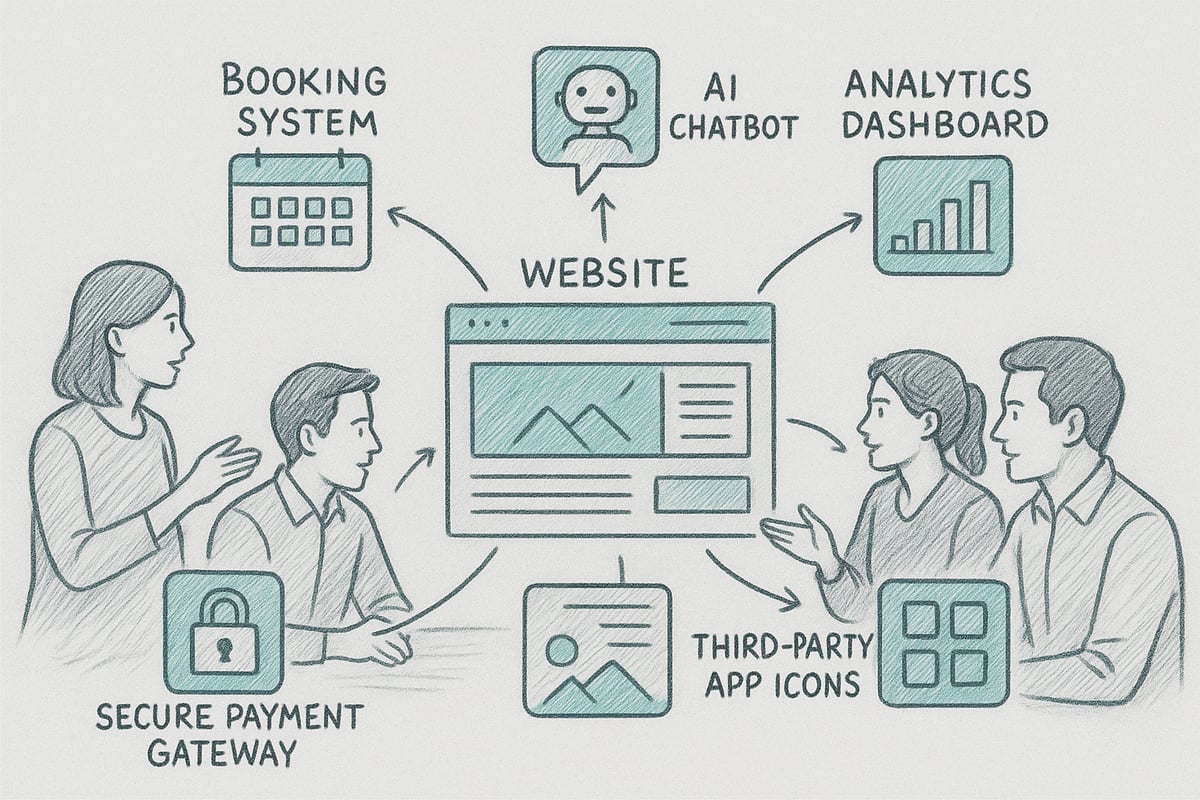
To ensure your client website delivers measurable business results in 2026, advanced functionality and seamless integrations are essential. Modern users expect convenience, security, and tailored digital experiences at every touchpoint. By implementing the right features, your client website can exceed expectations and drive long-term growth.
Essential Features for Client Engagement
A high-performing client website should empower users to take meaningful actions with minimal friction. Key engagement features include:
- Appointment booking systems for easy scheduling
- Secure client portals for document sharing and communication
- Resource libraries for on-demand access to guides and templates
Automated reminders and follow-ups help maintain engagement and reduce no-shows. Studies show that integrating online booking into a client website can increase client retention by 40 percent. By focusing on features that streamline interactions, you create a foundation for deeper trust and ongoing relationships.
Integrating AI and Automation Tools
AI-powered tools have become a cornerstone of the modern client website. Chatbots now handle instant support and lead qualification around the clock, drastically reducing response times. Automated email marketing and CRM integration ensure personalized communication at every stage.
For those seeking to push boundaries, frameworks like AI-Native Client-Side Interaction enable more efficient collaboration between users and AI on your client website, raising the bar for real-time personalization and support. With 70 percent of businesses using AI for website personalization, leveraging automation is no longer optional, but essential for staying competitive.
Secure Payment and E-Commerce Solutions
A secure checkout process is critical for building trust on your client website. Implement PCI-compliant payment gateways and digital wallet options to support a variety of payment preferences. Subscription management tools make recurring services seamless for both clients and administrators.
Security measures such as SSL certificates and multi-factor authentication protect sensitive financial data. Reliable e-commerce solutions reduce cart abandonment rates by 18 percent, ensuring higher conversions and a stronger revenue stream for your client website.
Analytics, Reporting, and Data-Driven Insights
To maximize the impact of your client website, real-time analytics and comprehensive reporting are vital. Use dashboards that track key performance indicators, such as engagement rates, conversion rates, and traffic sources.
Predictive analytics can forecast client behavior, allowing you to proactively adjust your strategies. Data-driven decision-making helps your client website grow revenue twice as fast as static sites. Regular review of insights leads to continuous improvement and smarter business outcomes.
Third-Party Integrations and API Connectivity
Seamless integration with third-party platforms unlocks new capabilities for your client website. Connect scheduling, marketing, and wellness tools to streamline operations and deliver unified experiences.
API connectivity allows for real-time data sharing across systems, reducing manual tasks and errors. On average, integrated client website systems can save over 10 hours per month in administrative time. By prioritizing flexible integrations, you future-proof your client website and enable effortless scaling as your business evolves.
Step 4: SEO, Performance, and Accessibility Optimization
Optimizing your client website for 2026 means addressing search visibility, technical speed, usability, and inclusivity together. Let’s explore the critical steps to ensure your client website not only ranks higher but delivers a seamless experience for every visitor.
Core SEO Strategies for 2026
SEO has evolved rapidly, and a successful client website in 2026 must embrace advanced tactics. Focus on semantic search, demonstrating E-E-A-T (Experience, Expertise, Authoritativeness, Trustworthiness), and establishing topical authority.
Structured data and schema markup are essential for search engines to understand your content. In fact, implementing schema can increase click-through rates by 30%.
| SEO Strategy | Benefit | Example Impact |
|---|---|---|
| Semantic Search | Better context matching | Higher relevance |
| E-E-A-T | Improved trust | Better rankings |
| Schema Markup | Rich results in SERPs | +30% CTR |
Prioritize these strategies to future-proof your client website’s visibility.
Technical Performance and Page Speed
Technical performance is foundational to user experience and SEO. Google’s Core Web Vitals have set the benchmark for measuring real-world speed and interactivity.
Optimize your client website by:
- Compressing images
- Using lazy loading for media
- Leveraging a Content Delivery Network (CDN)
Even a 1-second improvement in load time can boost conversions by 7%. Regularly test your client website with tools like PageSpeed Insights to diagnose and fix bottlenecks.
Local SEO and Voice Search Optimization
Local presence is critical in 2026, as voice search now drives half of all local queries. Optimize your client website for local SEO by:
- Keeping your Google Business Profile updated
- Building local citations and collecting reviews
- Using conversational keywords that match voice queries
For example, “find a wellness clinic near me” is now a standard voice request. Prioritizing these tactics ensures your client website attracts local clients who use both text and voice to search.
Accessibility and Inclusive Design
Accessibility is non-negotiable for any client website. Implement ARIA labels, keyboard navigation, and descriptive alt text to meet WCAG 3.0 standards. Testing with both automated tools and real users is vital.
Emerging frameworks, like those discussed in Inclusive and Customizable Web Accessibility, enable user-driven adjustments for truly personalized experiences. Inclusive sites see up to 15% more returning visitors and expand your reach.
Ongoing SEO Monitoring and Adaptation
Continuous improvement is key for a high-performing client website. Schedule monthly audits, track rankings, and benchmark against competitors. Adapt quickly to algorithm updates and shifting search trends.
Data shows regular audits reduce SEO issues by 40%. For comprehensive support, explore Comprehensive Website Maintenance Services to keep your client website optimized for the future.
Step 5: Maintenance, Security, and Future-Proofing Your Website
Ensuring your client website remains high-performing, secure, and adaptable is essential for long-term success. In 2026, maintenance, security, and future-proofing are interconnected priorities that directly impact client trust and business growth.
Proactive Website Maintenance Strategies
A proactive approach to maintaining your client website is vital for minimizing downtime and ensuring optimal performance. Scheduled software updates, daily backups, and continuous uptime monitoring should form the backbone of your maintenance plan.
Automation tools can simplify routine tasks such as security scans and plugin updates. For industry-specific needs, reference Website Maintenance for Wellness Clinics to see how tailored strategies protect sensitive client data and streamline operations.
Regular maintenance not only reduces the risk of unexpected outages but also extends the lifespan of your client website, keeping it aligned with evolving business goals.
Advanced Security Protocols for Client Websites
Security is a non-negotiable pillar for any client website in 2026. SSL certificates, robust firewalls, and automated malware scanning protect sensitive information and build user trust.
Implement multi-factor authentication and granular user access controls to prevent unauthorized entry. Secure data storage practices, including encryption and regular vulnerability assessments, significantly lower the risk of breaches.
By prioritizing advanced security protocols, your client website can maintain compliance with global standards and reassure clients that their data is safe.
Scalability and Flexibility for Growth
Preparing your client website for future growth begins with a modular design and scalable infrastructure. Modular components make it easy to add new features or accommodate increased traffic without major overhauls.
Cloud-based solutions and load balancing ensure that as your client base expands, your site remains responsive and stable. Plan for flexible integrations to support evolving business models and technology needs.
A future-ready client website can handle surges in demand, launch new services quickly, and adapt to changing digital landscapes.
Staying Ahead with Emerging Technologies
To keep your client website competitive, monitor and adopt emerging technologies like AR, VR, Web3, and IoT integrations. Piloting new features allows you to identify what delivers value to your audience and maintain a leading position in your industry.
Explore resources such as Optimizing Technology and Digital Wellness to understand how digital wellness trends and advanced integrations can enhance your website’s capabilities.
Early adoption of innovative tools not only improves user experience but also increases client retention and brand loyalty.
Training, Support, and Client Empowerment
Empowering clients to manage their client website confidently requires comprehensive documentation and ongoing training. Provide clear user guides, video tutorials, and access to a knowledge base for self-service support.
Establish support plans that include regular check-ins, troubleshooting assistance, and updates on new features. Well-trained clients report fewer support tickets, which means your team can focus on strategic initiatives instead of repetitive issues.
By investing in client education and support, you help ensure the long-term success and resilience of every client website.
As you look ahead to 2026, it’s clear that a high-performing client website is essential for real business growth—not just a digital presence. From intuitive design and advanced AI integrations to robust security and ongoing optimization, every detail matters in keeping your wellness business ahead of the curve. If you’re ready to elevate your website and focus on what you do best, let us partner with you to build and maintain a site that truly supports your goals. Let’s make your online presence work for you—Work with us now.