

The demand for health coaching websites is soaring as wellness professionals strive to build a strong digital presence in 2026. With more individuals seeking support online, an impactful website is now essential for health coaches to stand out in a crowded market.
A well-crafted health coaching website can be the difference between blending in and leading the field. In this article, you will discover 9 brilliant website ideas tailored for health coaching success. Each strategy is designed to help you attract, engage, and convert more clients, ensuring your online presence thrives for years to come.
Get ready to explore actionable insights and creative concepts that will future-proof your website, helping your health coaching practice flourish in the evolving digital landscape.
The Evolving Role of Health Coaching Websites in 2026
The landscape for health coaching websites is rapidly transforming as the wellness industry embraces a digital-first approach. In 2026, the majority of client interactions, consultations, and even ongoing support have shifted online, making a robust website more critical than ever for health coaches.
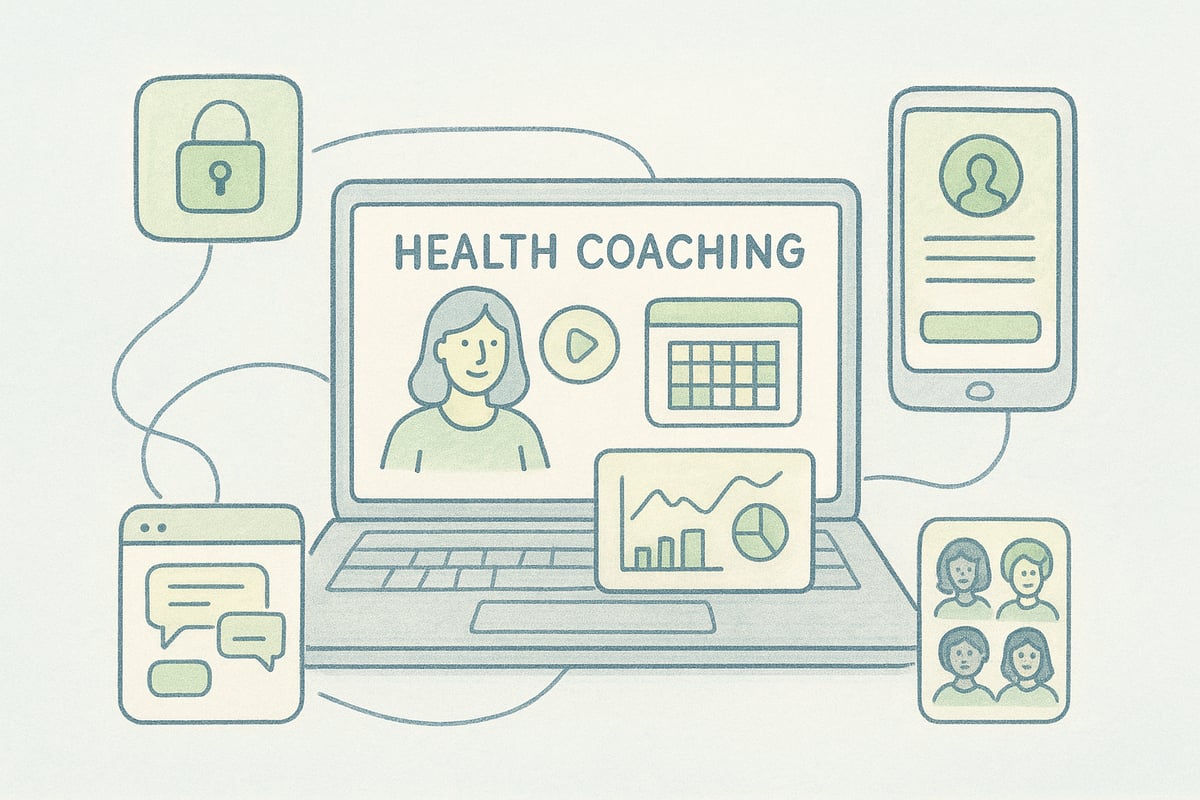
Virtual coaching and telehealth have become the standard rather than the exception. Clients expect seamless experiences, from initial discovery to ongoing engagement. As a result, health coaching websites are now designed to support video consultations, chat features, and instant resource access, all from a single platform.
User expectations are evolving quickly. Visitors look for personalized journeys, interactive tools, and self-service options that allow them to take charge of their wellness. Features like AI-driven recommendations, dynamic dashboards, and interactive assessments are not just innovative, but expected.
Data from industry reports show a significant uptick in website traffic and online bookings for health coaching services. For example, a 2025 survey found that wellness sites with integrated booking tools saw a 40% increase in new client appointments. This shift highlights the competitive advantage of well-optimized health coaching websites.
Trust and credibility are vital in the digital wellness space. Clients want assurance that their sensitive health data is handled securely. Compliance with HIPAA, GDPR, and other privacy regulations is now a baseline requirement. Secure client portals, encrypted messaging, and transparent privacy policies are standard features on leading health coaching websites.
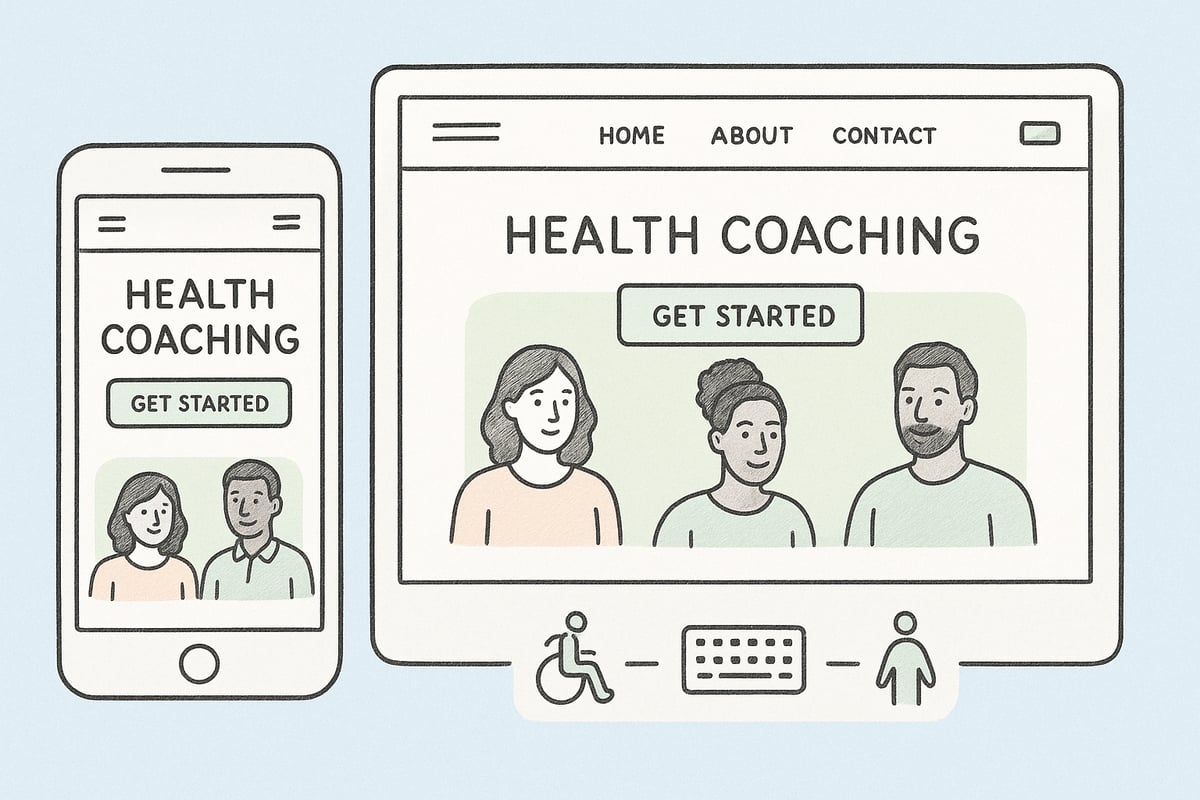
Mobile-first design is another crucial trend. With over 70% of wellness searches now happening on smartphones, responsive layouts and fast load times are essential. Accessibility is also at the forefront, as coaches aim to serve clients of all abilities and backgrounds. Websites that are ADA-compliant and inclusive reach broader audiences and foster greater engagement.
Health coaching websites have evolved into central hubs for business operations. They bring together educational content, community forums, scheduling, and client management tools. For many coaches, their website is no longer just a digital brochure, but the heartbeat of their practice.
To illustrate, top-performing health coaches now use their sites to host live webinars, deliver online courses, and facilitate peer support groups. These dynamic features help scale their impact and reach clients worldwide.
For those seeking inspiration or a deeper dive into best practices, the Wellness Coaching Websites Guide offers a curated look at effective strategies and real-world examples.
As the digital landscape continues to evolve, health coaching websites will remain essential for attracting, engaging, and supporting clients in 2026 and beyond.
9 Brilliant Health Coaching Website Ideas for 2026 Success
The future of health coaching websites is bright, with innovation driving meaningful client engagement. To thrive in 2026, health coaches must embrace advanced website features that address evolving client needs, foster trust, and support business growth. Here are nine standout ideas to elevate your online presence and set your practice apart.
1. Hyper-Personalized User Experiences
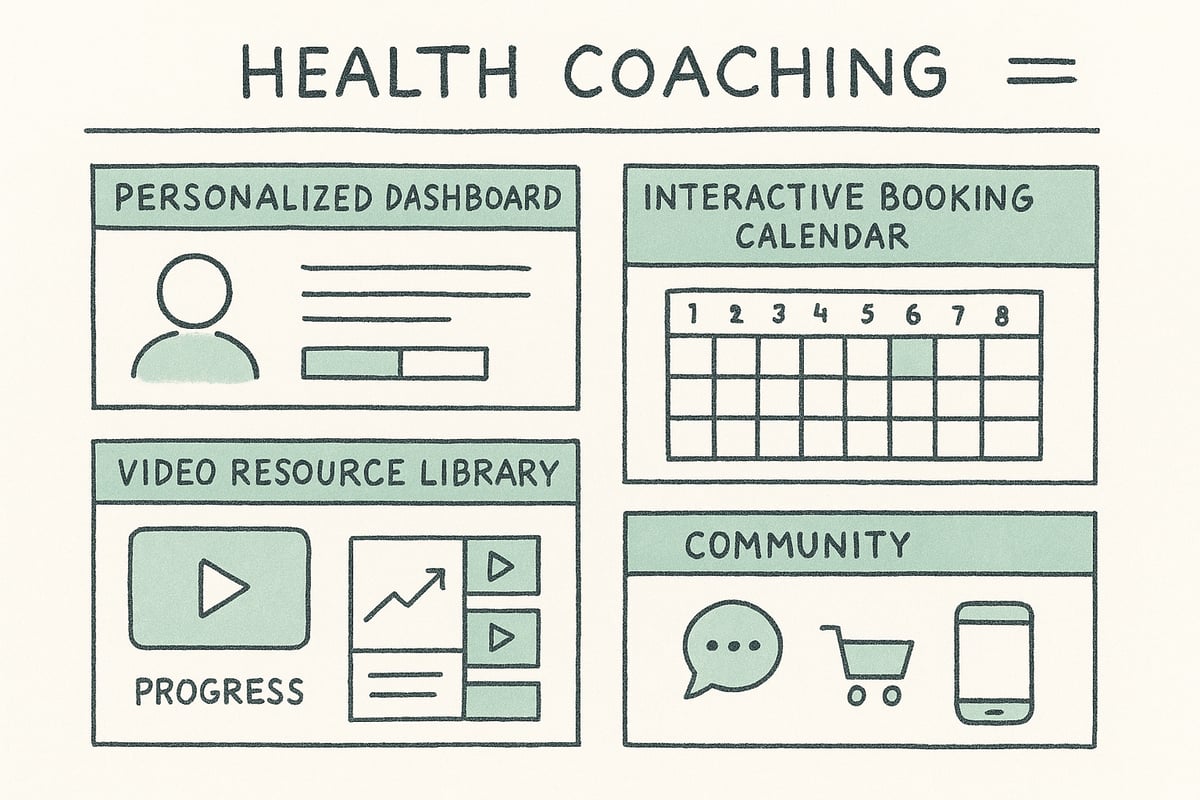
Personalization is revolutionizing health coaching websites. In 2026, AI and machine learning will tailor every aspect of a client’s journey. Imagine a homepage that adapts to each visitor, offering tailored advice and resources based on their health goals and previous interactions.
Dynamic dashboards display real-time progress, while interactive quizzes and assessments refine the experience further. For example, users who input dietary preferences receive curated meal plans and recipe suggestions instantly.
This level of customization boosts engagement and conversion rates. Clients feel seen and supported, which leads to improved outcomes and retention. For a deeper dive into how AI is shaping personalized experiences, explore AI-Driven Personalization in Healthcare Websites.
By leveraging these advances, health coaching websites become trusted digital companions, turning visitors into loyal clients.
2. Seamless Virtual Consultation Booking
A frictionless booking system is essential for health coaching websites. Integrated scheduling tools allow clients to reserve appointments in real time, eliminating back-and-forth emails. Once booked, automated reminders and calendar sync features keep both coach and client on track.
Secure payment gateways within the booking flow ensure transparency and convenience. For instance, a step-by-step process guides new clients from choosing a service to confirming their slot, all from their mobile device.
Mobile-friendly booking is a must, as many users schedule sessions on the go. This seamless experience not only increases bookings but also reflects the professionalism and reliability of health coaching websites.
By simplifying appointment management, coaches can focus more on client care and less on administrative tasks.
3. Content-Rich Wellness Resource Libraries
A robust resource library sets health coaching websites apart in a crowded market. Curated articles, videos, and downloadable guides empower clients to learn at their own pace. Tagging and categorization make it simple for users to find content aligned with their specific health goals.
Multimedia integration caters to different learning preferences. For example, a guided meditation audio library or a collection of nutrition videos enhances accessibility and engagement.
Consistent publishing of high-value content not only supports client education but also drives SEO performance. Health coaching websites that offer rich resources become go-to destinations for wellness information, increasing organic traffic and authority.
Clients appreciate having a central hub for trustworthy information, deepening their relationship with your brand.
4. Interactive Progress Tracking and Goal Setting Tools
Progress tracking transforms health coaching websites into motivational platforms. Digital trackers for habits, nutrition, and exercise allow clients to monitor their journey in real time. Visual dashboards display milestones, making achievements tangible.
Automated feedback and motivational messages keep clients inspired. For instance, weekly check-in forms with instant feedback help clients stay accountable and celebrate wins.
Data visualization enhances transparency and retention. When clients see their progress, they are more likely to stay engaged with health coaching websites and continue their wellness journey.
These tools foster accountability, making it easier for coaches and clients to collaborate on setting and achieving personalized goals.
5. Community-Building Features and Peer Support
Fostering community is vital for health coaching websites. Private forums, groups, or chat features connect clients with peers facing similar challenges. Live group coaching sessions and Q&A webinars create opportunities for real-time interaction.
Gamification elements, such as challenges and leaderboards, add excitement. For example, a monthly wellness challenge with community recognition encourages friendly competition and support.
Community features increase motivation and loyalty. When clients feel part of a supportive network, they are more likely to refer friends and stick with their coaching program. Health coaching websites that nurture community build lasting relationships and drive organic growth.
A vibrant online community can be a differentiator, transforming your website into a lively hub for wellness.
6. Secure Client Portals and Confidentiality Tools
Trust is the foundation of effective health coaching websites. Secure client portals provide password-protected access to session notes, resources, and private communications. Compliance with HIPAA or GDPR ensures data privacy and builds client confidence.
Encrypted messaging allows confidential discussions between coach and client. Document upload and download features enable personalized plan sharing with ease.
Robust security measures signal professionalism. Health coaching websites that prioritize confidentiality attract clients who value privacy and safety in their wellness journey.
When clients know their information is protected, they are more likely to engage deeply and share sensitive health details, enhancing the coaching relationship.
7. Integrated E-commerce for Digital Products & Courses
Diversifying revenue is essential for sustainable health coaching websites. An integrated online store allows coaches to sell eBooks, meal plans, and self-paced courses directly from their site. Upsell opportunities for workshops or premium resources boost average transaction value.
Automated delivery and access management simplify the client experience. For example, bundled coaching packages with instant downloads provide added value and convenience.
E-commerce integration transforms health coaching websites into comprehensive wellness platforms. By offering digital products, coaches expand their reach and impact beyond one-on-one sessions.
Clients benefit from flexible learning options, while coaches enjoy new income streams that scale with their business.
8. Automated Lead Nurturing and Email Marketing
Effective lead nurturing is a game changer for health coaching websites. Smart pop-ups and lead magnets, such as free eBooks or guides, grow your email list organically. Drip campaigns and personalized email sequences keep new leads engaged and informed.
Integration with CRM systems streamlines client onboarding and communication. For instance, a free resource download in exchange for an email signup initiates a tailored welcome sequence.
Ongoing engagement maximizes client lifetime value. Health coaching websites that automate lead nurturing build relationships at scale, turning prospects into loyal clients.
Consistent communication ensures clients feel supported at every stage of their wellness journey.
9. Advanced Local SEO and Voice Search Optimization
Visibility is critical for health coaching websites in a competitive digital landscape. Optimizing site structure and content for local search attracts clients in your area. Schema markup enhances your listings with rich results, increasing click-through rates.
Voice search is surging, especially for health-related queries. Ensuring your site is voice search ready means clients can find you with phrases like “health coach near me.” Location-based landing pages support multi-region practices.
Data shows that health coaching websites leveraging local SEO and voice optimization see higher traffic and more bookings. Staying ahead of these trends ensures your practice remains discoverable as client search behaviors evolve.
A strategic approach to SEO future-proofs your online presence and maximizes growth potential.
Essential Design and Usability Best Practices for Health Coaching Websites
A compelling design is the foundation of effective health coaching websites. First impressions matter, and wellness clients expect digital spaces that feel both professional and inviting. A clean, uncluttered layout with plenty of white space helps create a calming atmosphere. This not only lowers cognitive load but also supports users as they explore your offerings.
Fast load times and mobile responsiveness are non-negotiable for health coaching websites. Clients are often searching for support on their phones or tablets. Responsive layouts, optimized images, and streamlined code ensure your site looks and works perfectly on any device. Prioritizing speed also improves SEO, keeping your website visible to those seeking wellness guidance.
Imagery and copy should reflect the diversity of your audience. Use authentic photos and graphics that represent different ages, backgrounds, and abilities. Clear, action-oriented calls-to-action (CTAs) guide visitors toward booking appointments, signing up for resources, or joining your community. Every CTA should be easy to find and understand, helping users navigate health coaching websites with confidence.
Accessibility is essential for all health coaching websites. Incorporate features like proper color contrast, alt text for images, and keyboard navigation to support users with disabilities. Adhering to Accessibility and Inclusivity Standards for Healthcare Websites ensures compliance and shows your commitment to serving every client. Making your site accessible also improves usability for everyone, not just those with special needs.
Consistent branding ties your entire website together. Soothing color schemes, professional fonts, and a unified visual identity build trust and reinforce your message. To see these principles in action, review some of the Best Wellness Website Examples for inspiration. These sites illustrate how thoughtful design can elevate health coaching websites, increasing user satisfaction and client engagement.
Choosing the Right Website Solutions for Your Health Coaching Practice
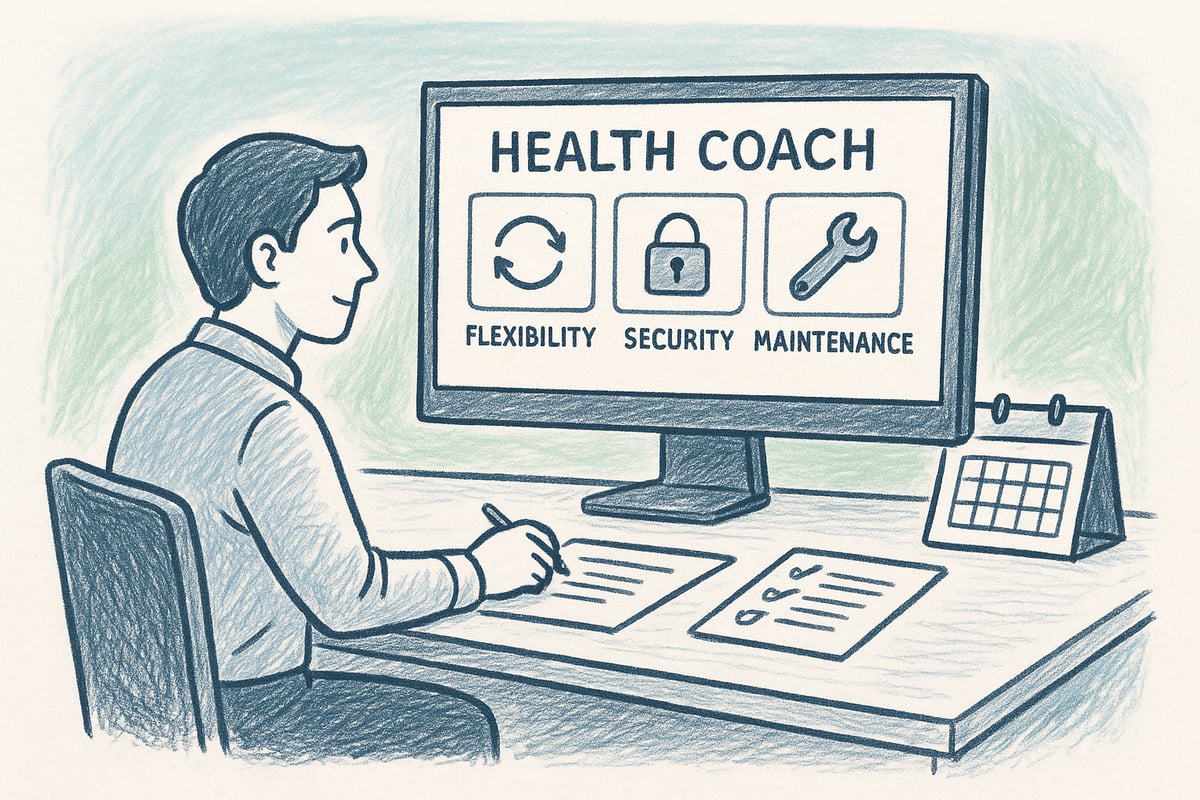
Selecting the best solutions for health coaching websites is a pivotal decision that shapes your online presence and client experience. Start by evaluating platforms based on their flexibility, scalability, and the quality of ongoing support. Consider whether the platform can adapt as your practice grows, and if it integrates seamlessly with essential tools for booking, content, and client management.
Next, weigh the advantages of building your site yourself versus hiring an expert. DIY options may offer affordability and quick setup, but professional website services often deliver custom features, advanced security, and a polished look that sets you apart in the crowded health coaching landscape.
Ongoing maintenance is crucial to ensure your health coaching websites stay secure and up-to-date. Regular updates, backups, and security checks protect client data and maintain compliance. For targeted support, explore Health Coaching Website Maintenance services that specialize in the unique needs of wellness professionals.
Finally, align your website’s features with your coaching niche, business goals, and desired client experience. As your practice evolves, plan for future upgrades such as new booking tools, e-commerce, or advanced interactivity, ensuring your website continues to serve as the foundation of your digital growth.
As you look ahead to 2026 and consider these innovative website strategies, remember that your health coaching practice deserves a digital presence as dynamic as your clients’ goals. You don’t have to navigate these changes alone—we’re here to handle the technical details, from seamless booking systems to local SEO, so you can focus on the heart of your business. If you’re ready to elevate your website and set yourself apart in the wellness space, let’s start building your success story together. Work with us now