

The life coaching industry is evolving at lightning speed, with digital innovation shaping how coaches connect and grow their practices. In 2026, a compelling life coaching website is no longer optional—it is the foundation for attracting, engaging, and converting clients in a crowded market.
Online coaching is surging as client expectations shift toward seamless, tech-driven experiences. Trends in website design, user experience, and AI are setting new standards for success. If you want your coaching business to stand out, you need strategies that elevate credibility, boost visibility, and foster real engagement.
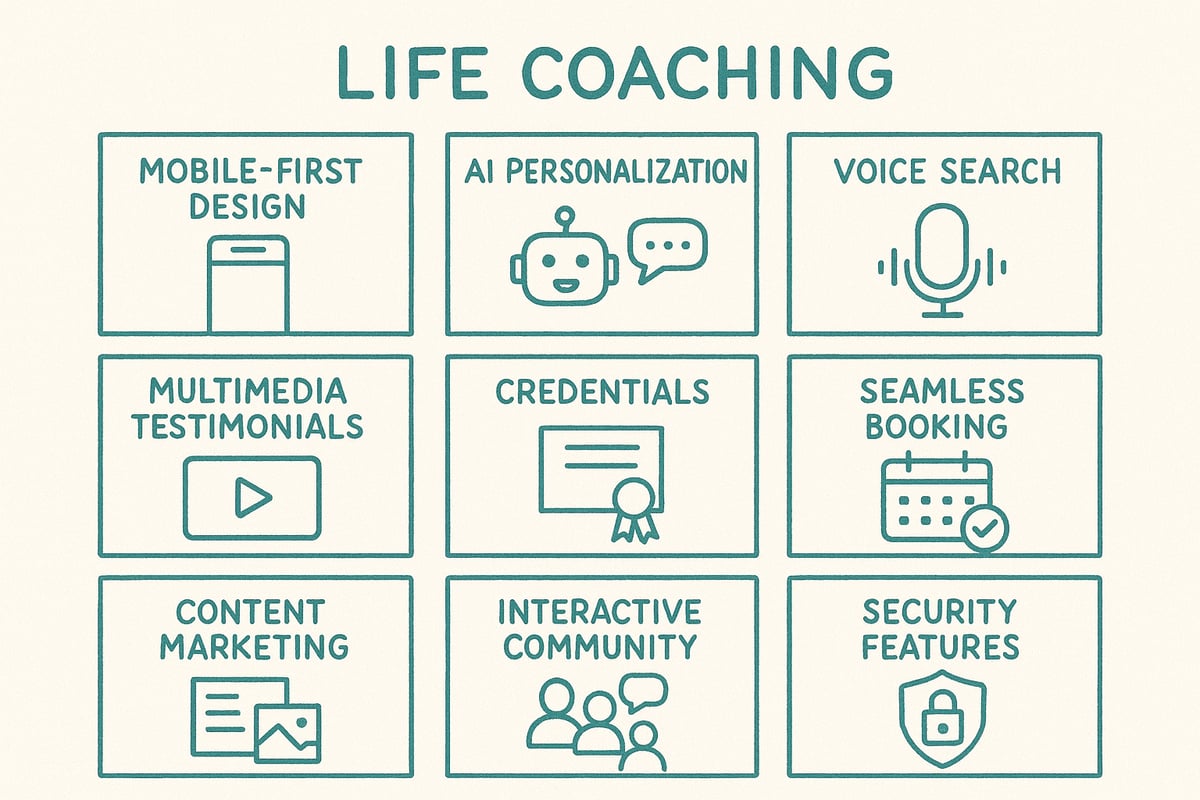
This article reveals nine powerful website strategies designed for the modern coach: mobile-first accessible design, AI-powered personalization, voice and visual search optimization, multimedia proof, transparent credentials, seamless booking, content and SEO authority, interactive communities, and robust security. Implementing these tactics will future-proof your business and help you thrive in the digital coaching landscape.
The Evolving Landscape of Life Coaching Websites
The landscape for every life coaching website is rapidly transforming as digital innovation accelerates. Life coaches are navigating new client expectations, shifting service models, and a wave of technological advancements that shape how they connect, engage, and deliver value online.
The Shift to Digital-First Coaching
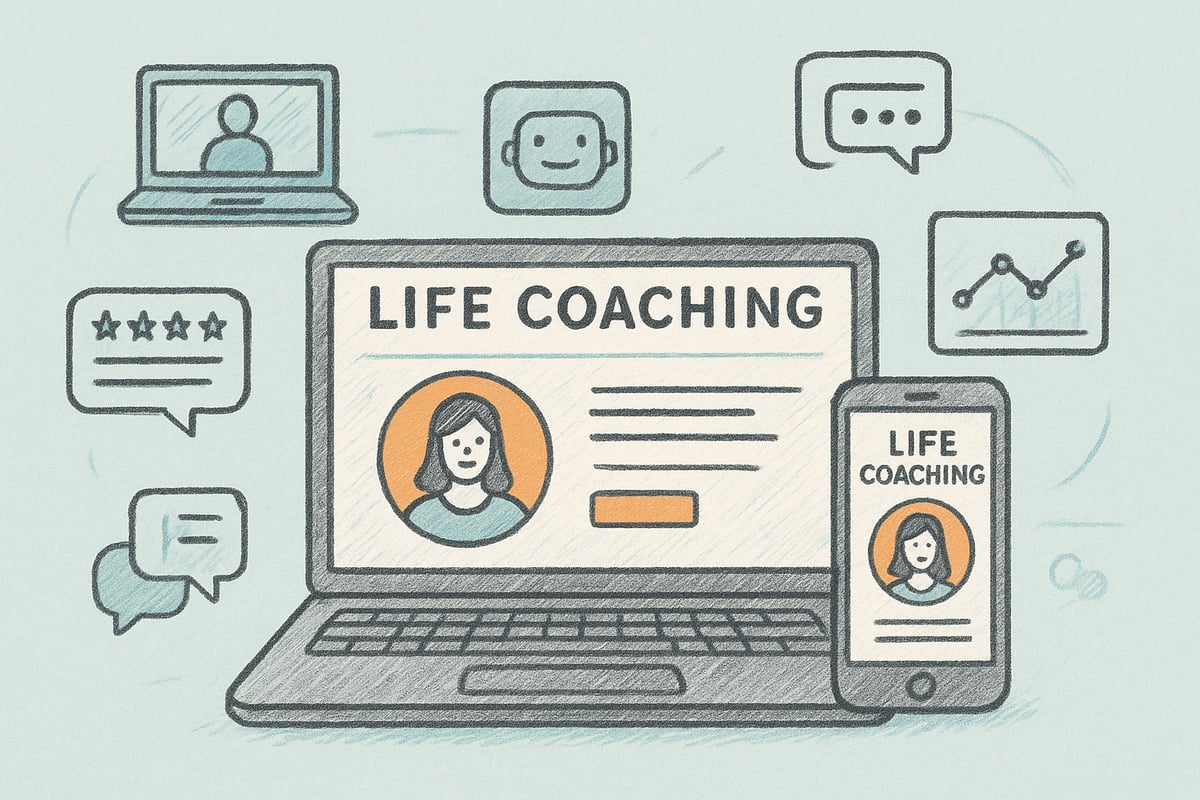
Today, a life coaching website is the primary gateway for reaching and serving clients. More coaches rely on digital channels for client acquisition than ever before, with virtual coaching sessions and online communities becoming the norm. Hybrid models, blending in-person and digital services, allow for greater flexibility and reach.
Recent global events have accelerated the adoption of digital practices. Online coaching platforms have surged in popularity, and clients now expect seamless digital experiences. As a result, life coaching website strategies must prioritize convenience, accessibility, and real-time interaction to stay relevant.
User Experience as a Differentiator
User experience (UX) is now a critical factor in the success of any life coaching website. Visitors expect intuitive navigation and fast loading times on every device. Mobile-first design is not just a trend but a standard, as more clients access coaching services on the go.
Personalization features, such as tailored recommendations and interactive elements, enhance the user journey. According to industry studies, 88% of online consumers are less likely to return to a site after a poor experience. Coaches who invest in coaching sites best practices report higher engagement and improved conversion rates, showing that UX directly impacts business outcomes.
SEO and Content Trends for 2026
Emerging trends in SEO are reshaping the way a life coaching website attracts and engages visitors. Voice search optimization is becoming essential, as users increasingly use conversational queries. Video content and interactive elements now drive deeper engagement and keep audiences on the site longer.
SEO strategies are evolving to target long-tail, niche keywords relevant to specific coaching specialties. AI-driven content recommendations are also rising, helping coaches deliver timely, personalized resources to their visitors. Those who rank for specialized keywords see a steady flow of more qualified leads and higher conversion rates.
Trust, Authority, and Social Proof
Building trust is fundamental for every life coaching website aiming to convert visitors into clients. Displaying credentials, certifications, and ethical guidelines prominently reassures potential clients of legitimacy. Third-party reviews, client stories, and interactive proof—such as video testimonials and case studies—further boost credibility.
Statistics show that 92% of consumers trust peer recommendations over traditional advertising. Coaches who showcase robust social proof consistently achieve higher conversion rates. Incorporating measurable outcomes and success metrics on the website reinforces authority and fosters lasting client relationships.
9 Powerful Life Coaching Website Strategies for 2026
In 2026, a life coaching website is more than just a digital business card. It is your interactive storefront, your automated assistant, and your credibility engine—all at once. The following nine strategies are designed to help your life coaching website thrive in a fast-changing landscape, ensuring you attract, engage, and convert your ideal clients.
1. Prioritize Mobile-First, Accessible Design
Today’s clients expect a seamless life coaching website experience on any device. A mobile-first approach ensures your site is fully responsive, adapting perfectly to phones, tablets, and desktops. With over 70% of coaching website visits now originating from mobile devices, optimizing for mobile is no longer optional.
Key actions for your life coaching website:
- Use large, readable fonts and touch-friendly buttons for easy navigation.
- Streamline menus to reduce friction for mobile users.
- Implement accessibility best practices (WCAG compliance) for all visitors.
- Leverage progressive web app features for an app-like feel.
- Regularly test and update mobile performance.
Data shows that coaches with mobile-optimized sites see lower bounce rates and longer session durations. For more on the importance of mobile optimization, review the latest mobile device website traffic statistics. These improvements make your life coaching website accessible, inclusive, and ready for the future.
2. Integrate AI-Powered Personalization
Personalization is now a baseline expectation. By integrating AI-driven features, your life coaching website can deliver custom content and recommendations based on visitor behavior. AI chatbots provide instant support and capture leads, while dynamic scheduling tools adapt to different time zones and preferences.
Enhance your life coaching website with:
- Personalized calls-to-action for unique audience segments.
- Content recommendations informed by past user interactions.
- Predictive analytics to anticipate client needs.
Websites using AI personalization often report up to 40% higher conversion rates. Personalized experiences boost client satisfaction and retention, making your life coaching website stand out. To explore emerging trends, see this guide on AI-powered personalization in web design.
3. Optimize for Voice and Visual Search
By 2026, nearly half of all searches are projected to be voice-based. To ensure your life coaching website remains discoverable, implement structured data and schema markup for voice compatibility. Use conversational, natural language in your content and FAQs to align with how people speak.
Make your life coaching website ready for visual and voice search:
- Optimize images with descriptive alt text for visual search engines.
- Create audio content and podcasts to reach clients on voice platforms.
- Adapt SEO strategies to capture long-tail, spoken queries.
High-quality images and clear descriptions help clients find your services using visual tools. These steps ensure your life coaching website remains relevant as search habits evolve.
4. Showcase Transformational Results with Multimedia
Prospective clients want proof of your impact. Multimedia elements help your life coaching website build trust and credibility. Feature before-and-after stories, client testimonials, and case studies in video format. Use interactive sliders and infographics to make results tangible.
Boost your life coaching website with:
- Embedded audio snippets or podcast interviews with clients.
- User-generated content that fosters community.
- Highlighting measurable outcomes with data-driven success.
Pages with multimedia content typically see double the average visit duration. Video testimonials alone can increase conversion rates by up to 34%. These elements make your life coaching website more engaging and persuasive.
5. Build Trust with Transparent Credentials and Ethics
Trust is the foundation of any coaching relationship. Your life coaching website should prominently display certifications, accreditations, and ethical guidelines. Include a detailed “About” section to share your coaching philosophy and background.
Further establish trust by:
- Offering downloadable credentials or verification badges.
- Detailing privacy policies and confidentiality commitments.
- Using trust signals like secure payment icons and professional associations.
Coaches with visible credentials are perceived as three times more trustworthy. Featuring client privacy testimonials can further reassure visitors that your life coaching website is safe and ethical.
6. Implement Seamless Booking and Payment Systems
Clients expect frictionless scheduling and payment experiences. Integrate real-time scheduling tools with calendar syncing on your life coaching website. Offer multiple secure payment options, including digital wallets and subscriptions.
Key upgrades for your life coaching website:
- Automate appointment confirmations and reminders.
- Allow clients to reschedule or cancel bookings online.
- Support group sessions, workshops, and package bookings.
Automated booking reduces administrative workload by 60%. Sites with seamless booking features see higher conversion rates, making your life coaching website more efficient and client-friendly.
7. Leverage Content Marketing and SEO for Authority
Content is the engine that drives visibility and authority. Publish regular blog posts, guides, and resources tailored to client pain points. Optimize your life coaching website content for emerging search trends and long-tail keywords.
Strengthen your life coaching website by:
- Using pillar pages and topic clusters to build topical authority.
- Incorporating video, audio, and downloadable resources.
- Encouraging guest contributions and expert interviews.
Coaches who blog weekly generate 67% more leads. Monitoring analytics helps refine your content strategy, keeping your life coaching website relevant and authoritative.
8. Foster Community with Interactive Features
A vibrant community increases engagement and retention. Add members-only areas, discussion forums, or mastermind groups to your life coaching website. Host live webinars, Q&A sessions, and virtual workshops to bring clients together.
Interactive features to consider for your life coaching website:
- Enable direct messaging or group chat for peer support.
- Gamify engagement with badges and leaderboards.
- Use surveys and polls to gather feedback and ideas.
Community features can boost client retention by 30%. Providing exclusive resources and peer support transforms your life coaching website into a hub for growth.
9. Ensure Ongoing Security, Maintenance, and Compliance
Security and compliance are non-negotiable in 2026. Regularly update your life coaching website’s software, plugins, and security protocols. Implement SSL certificates and data encryption to protect client privacy.
Best practices for your life coaching website:
- Adhere to data protection regulations like GDPR and CCPA.
- Schedule routine backups and disaster recovery plans.
- Monitor site health and performance with automated tools.
For expert guidance, consider these website maintenance insights for life coaching services. Communicate your security measures to clients, building trust and minimizing risk for your life coaching website.
Measuring Success: KPIs and Analytics for Life Coaching Websites
Tracking and analyzing performance is essential for any life coaching website aiming to stay competitive and client-focused. By measuring the right metrics, coaches can identify what works, refine their digital strategies, and create a seamless experience that keeps clients coming back.
Key Performance Indicators for Coaches
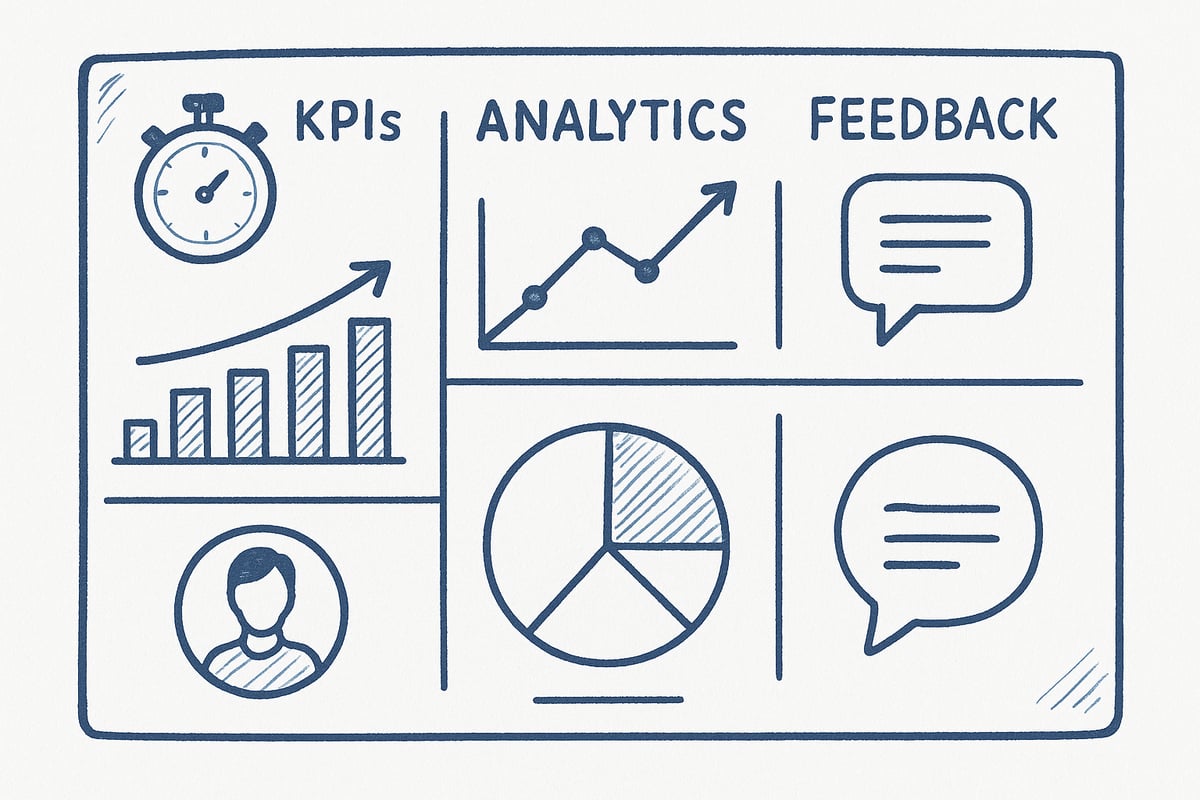
To understand how well your life coaching website is performing, focus on KPIs that reflect both marketing and client engagement success. Common indicators include:
- Website traffic and unique visitors
- Session duration and bounce rates
- Lead generation and conversion percentages
- Booking rates and client acquisition costs
For example, coaches who consistently monitor KPIs report a 25% improvement in marketing ROI. Setting clear benchmarks helps you track progress and identify growth opportunities. For more insights into optimizing conversion rates, review these High-Converting Coaching Websites for actionable ideas.
Using Analytics to Drive Continuous Improvement
Analytics platforms are invaluable for a life coaching website. Use them to pinpoint top-performing content, analyze user flows, and spot drop-off points where visitors leave your site. Effective strategies include:
- Regular A/B testing of landing pages and CTAs
- Reviewing heatmaps to see user interaction patterns
- Segmenting data by traffic source or device
A data-driven approach allows you to refine your messaging, design, and content strategy. Coaches who leverage analytics can quickly adapt to changing client preferences and increase their digital impact.
Client Feedback and Experience Metrics
Direct feedback is a goldmine for refining your life coaching website. Collect client satisfaction surveys, track review ratings, and monitor Net Promoter Scores (NPS) to gauge overall sentiment. Consider:
- Embedding feedback forms on key pages
- Encouraging testimonials and success stories
- Using polls and quick surveys for ongoing input
Websites with built-in feedback loops gain deeper insights into client needs and expectations. This continuous feedback helps tailor both service offerings and website features for maximum impact.
Staying Ahead: Adapting to Future Trends
To future-proof your life coaching website, stay alert to emerging technologies and industry standards. Proactive steps include:
- Monitoring new web design trends and adapting as needed
- Keeping up with evolving SEO, accessibility, and privacy requirements
- Investing in ongoing education or certification
Early adopters of innovation consistently outperform competitors. Encourage experimentation and regularly review your digital strategy to maintain a leading edge in the coaching space.
As you look ahead to 2026, it’s clear that a high-performing website is more than just a digital storefront—it’s the foundation for lasting client relationships and business growth. You deserve a site that reflects your unique coaching style, adapts to new technology, and keeps your focus where it belongs: on serving your clients. If you’re ready to elevate your wellness brand with expert guidance on design, optimization, and ongoing support, we’re here to help. Let’s build a site that truly works for you—Work with us now.