
Imagine your website suddenly going offline just as a customer is about to make a purchase. In today's digital world, even a brief outage can lead to lost revenue and damaged trust.
Businesses in 2026 face higher expectations and fierce competition online. Website maintenance is no longer optional—it is a crucial, ongoing process that keeps your digital storefront secure, fast, and effective.
This guide will show you actionable steps and best practices to ensure your site remains a powerful asset. You will learn how to keep your site running smoothly in 2026 with a comprehensive, step-by-step approach.
We will cover routine maintenance, security, performance optimization, content updates, and how to choose professional support. Get ready to safeguard your online presence and stay ahead in the digital landscape.
Why Website Maintenance Matters in 2026
The digital landscape in 2026 is more dynamic than ever before. Your website is not just a brochure, it is a core business asset. Customers expect immediate, seamless experiences at all hours. If your site is slow or unavailable, you risk losing them to competitors instantly. With rapid advances in AI-driven personalization, a surge in mobile usage, and tightening privacy laws, the bar for website maintenance has never been higher. According to Google, 53% of users abandon a site if it takes more than three seconds to load. This means every second counts for both your reputation and your revenue.
The Evolving Digital Landscape
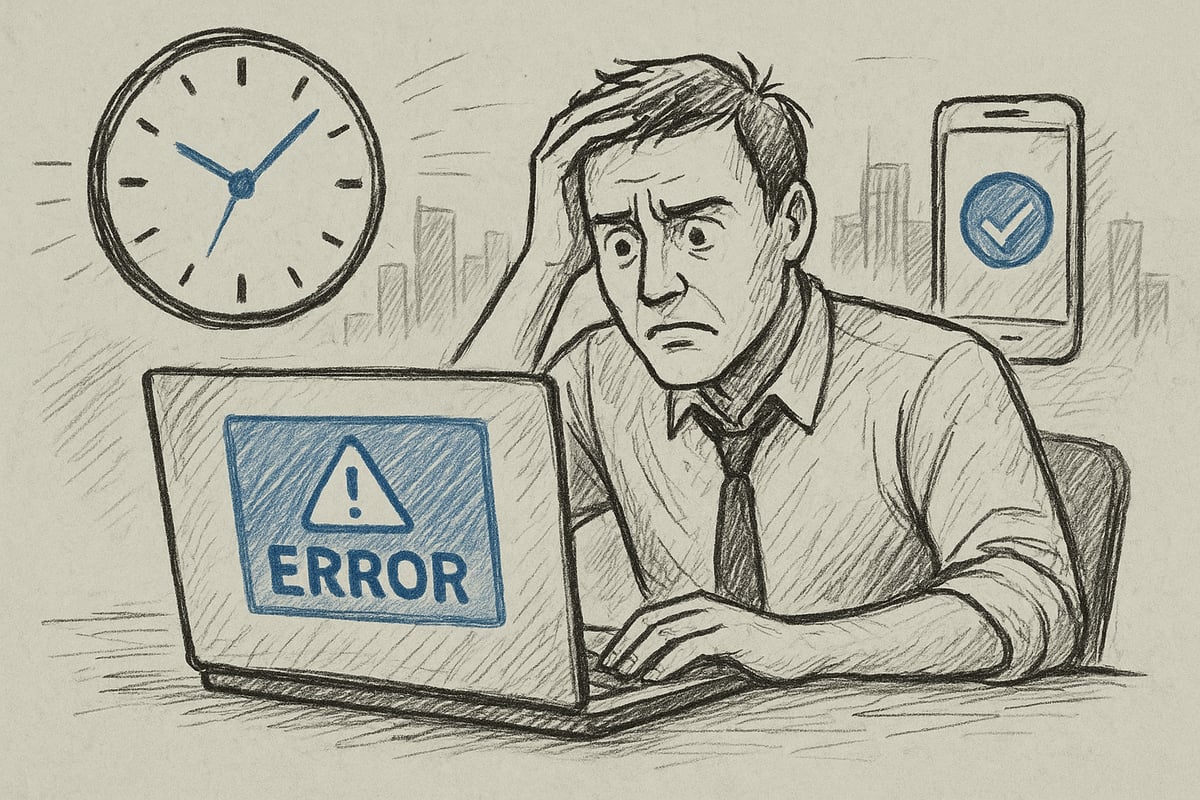
In 2026, website maintenance is essential because websites have evolved into business-critical platforms. Even a brief outage can disrupt sales, appointments, or key communications. Trends like AI-powered personalization, increased mobile engagement, and stricter privacy regulations shape how sites must perform and stay compliant. Customers now expect a fast, always-available experience. If your website lags or fails, you risk instant abandonment and lost business. According to Google industry benchmarks, more than half of users leave a site if it loads slowly. To stay competitive, website maintenance must be proactive and ongoing.
Consequences of Neglecting Maintenance
Neglecting website maintenance exposes your business to significant risks. Outdated plugins or themes create security gaps, making your site a target for cyberattacks. Broken links or slow load times can harm your reputation and push your site down in search engine results. In 2025, over 30,000 websites were hacked every day due to outdated software, according to Sucuri. Additionally, broken forms or malfunctioning checkout processes mean missed opportunities and frustrated customers. The financial impact is real; website downtime costs businesses thousands each month in lost revenue and recovery expenses.
SEO and User Experience Impact
Website maintenance is closely tied to SEO and user experience. Search engines penalize websites that are slow, insecure, or outdated, making it harder for potential customers to find you. Regular technical updates and fresh content help boost rankings and keep visitors engaged. For example, HubSpot reports that sites with ongoing updates can see up to double the organic traffic. Accessibility and mobile responsiveness are also vital, as both users and search engines prioritize sites that are easy to access on any device. Keeping your site technically sound and up to date is key to maximizing visibility and engagement.
Cost Savings and Business Continuity
Investing in website maintenance delivers long-term savings and strengthens business continuity. Proactive care reduces the need for expensive emergency repairs and helps prevent data loss, downtime, and potential legal issues. IBM found that the average cost of a data breach in 2025 reached $4.45 million, a figure that could devastate many businesses. Routine maintenance protects your reputation, ensures your website stays operational, and maintains customer trust. Ultimately, a well-maintained site supports your business goals and provides peace of mind.
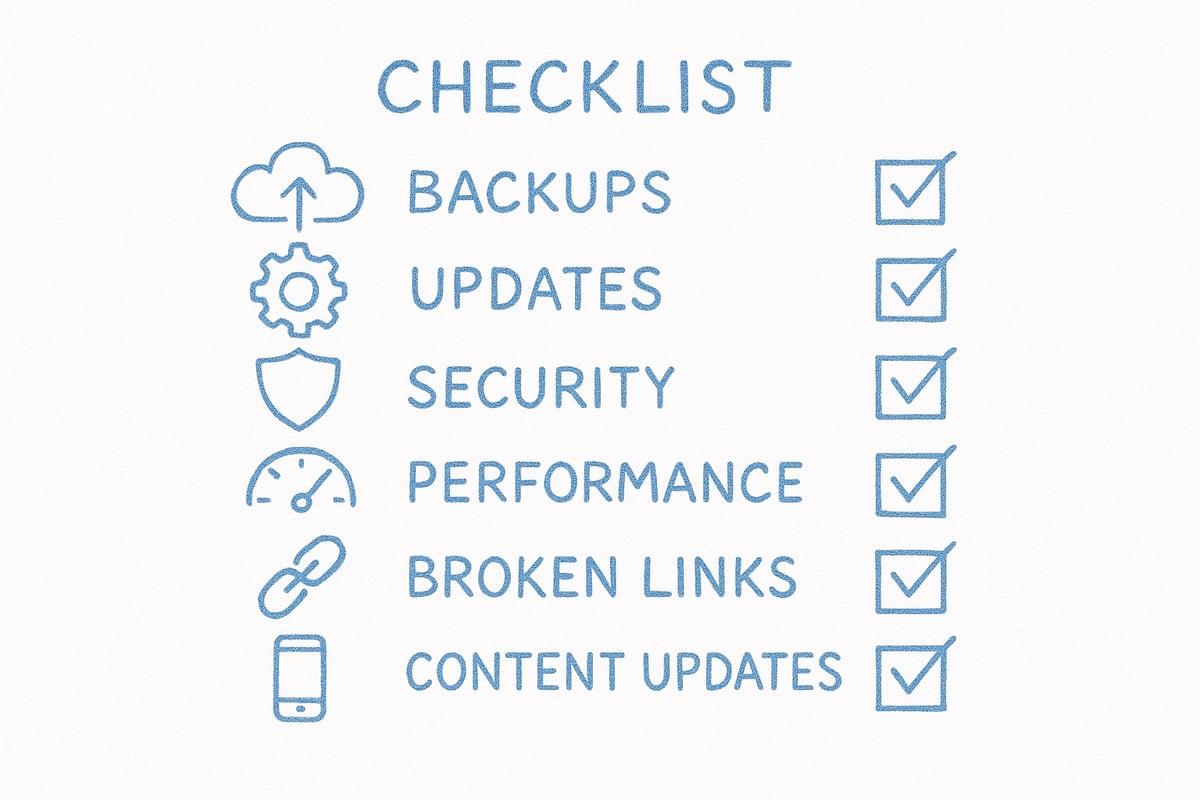
Essential Website Maintenance Tasks: A Step-by-Step Checklist
Keeping your site running at peak performance in 2026 requires a structured approach to website maintenance. By following a clear checklist, you can avoid common pitfalls, protect your investment, and ensure your website continues to deliver value. For those seeking comprehensive solutions, Website Maintenance and Support Services can provide expert assistance tailored to your needs.
1. Regular Backups
Regular backups are the cornerstone of any website maintenance plan. Schedule automated daily or weekly backups to safeguard your content and customer data.
Store these backups offsite or in the cloud so you're protected if your primary server fails. Quarterly, test your restore process to confirm your files can be recovered quickly.
- Automated backups prevent data loss from hacks or mistakes.
- Offsite storage adds an extra layer of security.
- Testing restores ensures reliability when disaster strikes.
Remember, 60% of small businesses never recover after a major data loss. Consistent website maintenance through backups is your best defense.
2. Software & Plugin Updates
Outdated software is one of the biggest risks in website maintenance. Each month, update your CMS, themes, and plugins to patch vulnerabilities and improve functionality.
Prioritize security updates and major releases first. Always test changes on a staging site to avoid disrupting your live environment.
- Update WordPress, Shopify, or your chosen platform regularly.
- Focus on security patches for critical plugins.
- Use staging areas to catch issues before they go public.
With over half of WordPress vulnerabilities linked to outdated plugins, diligent website maintenance is non-negotiable.
3. Security Monitoring & Protection
Security is a vital component of website maintenance. Begin by installing SSL certificates and enforcing HTTPS to secure data in transit.
Deploy firewalls and malware scanners to block threats before they reach your site. Set up brute-force protection and monitor for suspicious activity with real-time alerts.
- SSL and HTTPS build trust and protect user data.
- Firewalls and scanners stop most attacks at the gate.
- Alerts allow for fast response to emerging threats.
Google blacklists thousands of sites daily for malware, making website maintenance a must for ongoing protection.
4. Performance Optimization
A fast site is essential for both users and search engines. Website maintenance should include regular performance checks and optimizations.
Compress images using next-gen formats like WebP or AVIF. Minimize CSS and JS files, and enable browser caching for faster repeat visits. Test your site speed with tools such as Google PageSpeed Insights.
- Use lightweight images for quicker loads.
- Reduce file sizes and enable caching.
- Monitor speed and fix slowdowns promptly.
Sites that load in under two seconds see higher conversion rates, proving that performance-focused website maintenance pays off.
5. Broken Link & Error Checking
Broken links can hurt your SEO and frustrate visitors. As part of your website maintenance checklist, use automated tools monthly to scan for 404 errors and missing resources.
Redirect or fix outdated URLs to maintain your search rankings. Review for missing images or embedded resources to ensure a seamless experience.
- Automated scans catch errors early.
- Redirects preserve SEO equity.
- Visual checks maintain a polished appearance.
Just a few broken links can decrease rankings by up to 10%, highlighting the value of vigilant website maintenance.
6. Content Updates & Refreshes
Fresh content is a signal to search engines and customers that your business is active. Website maintenance should include quarterly updates to blogs, product pages, and testimonials.
Remove outdated offers and add new case studies or portfolio items. This keeps your site relevant and engaging for visitors.
- Schedule regular content reviews.
- Highlight recent success stories.
- Retire or revise obsolete information.
Sites with updated content experience 126% higher lead growth, making content a core part of website maintenance.
7. Accessibility & Mobile Responsiveness
Accessibility and mobile responsiveness are critical in 2026. Test your site on various devices and browsers to ensure everyone can access your content.
Follow WCAG 2.2 guidelines to address layout, font, and color issues. Regularly review for new accessibility standards as part of your ongoing website maintenance.
- Test using mobile and desktop devices.
- Ensure text is readable and layouts adjust smoothly.
- Address color contrast and interactive element accessibility.
Remember, 73% of users will leave if your site is not mobile-friendly, reinforcing why accessibility must be part of your website maintenance routine.
Security Protocols to Safeguard Your Website
Protecting your digital presence in 2026 requires more than just basic security tools. As cyber threats evolve, so must your website maintenance strategy. Staying proactive is key to minimizing risk, maintaining customer trust, and ensuring your business operates without costly interruptions.
Understanding the 2026 Threat Landscape
The threat landscape in 2026 is more complex than ever. AI-driven cyberattacks are on the rise, targeting businesses of all sizes and industries. Attackers use automation to find vulnerabilities, making reactive website maintenance insufficient.
Recent data shows phishing, ransomware, and credential stuffing are increasing. In fact, 82% of breaches in 2025 involved human error or social engineering. To stay ahead, businesses must prioritize ongoing website maintenance with advanced safeguards.
For more insights on the rise of AI-driven threats, see this overview of AI-driven cyberattacks on websites.
Implementing Multi-Layered Security Measures
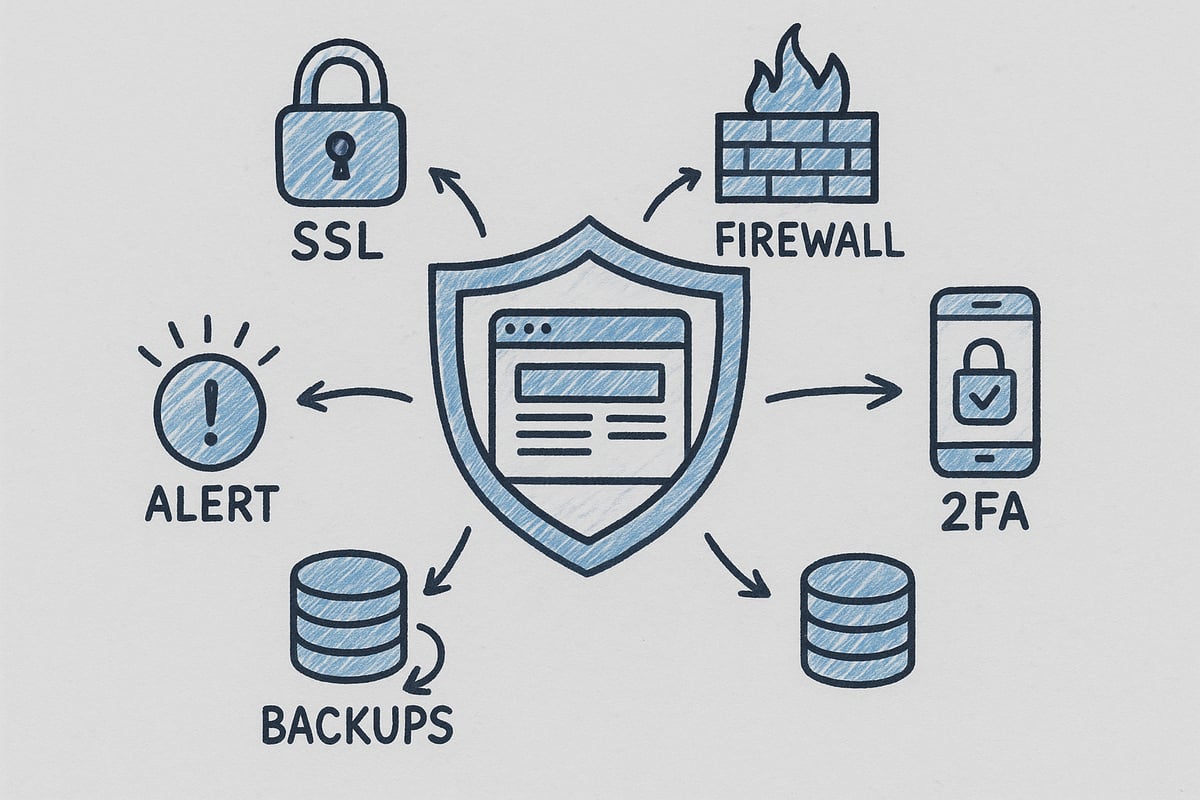
A strong website maintenance plan always includes multiple layers of defense. Start with two-factor authentication (2FA) for all admin accounts. Enforce strong password policies and limit login attempts to deter brute-force attacks.
Regularly review user roles and permissions to reduce unnecessary access. Layered security in website maintenance makes it much harder for attackers to compromise your systems. Combining these tactics creates a robust foundation for ongoing protection.
- Require 2FA for all admins
- Limit login attempts
- Enforce complex passwords
- Review and update user permissions
SSL, Encryption, and Secure Hosting
SSL certificates are now mandatory for every website. Google penalizes sites without HTTPS, impacting both trust and search rankings. Encryption of data, both in transit and at rest, is a core part of website maintenance.
Choose hosting providers that offer security features such as firewalls and DDoS protection. Secure hosting environments reduce the risk of breaches and downtime, making them a critical component of effective website maintenance.
- Install SSL for all domains
- Encrypt sensitive data
- Select hosts with advanced security
Routine Security Audits and Monitoring
Routine audits are essential to website maintenance. Schedule quarterly security assessments and vulnerability scans to catch issues early. Monitor server and site logs for unusual activity, and set up alerts for suspicious behavior.
Leverage security plugins or services that offer real-time threat detection. Consistent monitoring ensures that your website maintenance efforts are proactive, not reactive, helping defend against new and emerging threats.
- Conduct vulnerability scans quarterly
- Monitor logs for anomalies
- Use real-time threat detection tools
Handling and Recovering from Security Incidents
Even with the best website maintenance practices, incidents can still occur. Prepare an incident response plan outlining steps to isolate affected systems, restore from clean backups, and notify stakeholders promptly.
Quick action is critical. Fast response can reduce the cost and impact of a breach by 37%. Document every incident, learn from each event, and continually refine your website maintenance protocols for better resilience.
- Isolate compromised systems
- Restore from verified backups
- Inform all stakeholders
- Document and review each incident
Optimizing Website Performance for User Experience & SEO
A high-performing website is vital for delivering a seamless user experience and achieving strong SEO results. When visitors land on your site, every second counts. If your website maintenance is up to date, users enjoy fast, reliable access and search engines reward you with better rankings. Let’s break down the essential strategies to optimize your site’s performance and keep your digital presence ahead of the curve.
Speed Optimization Best Practices
Fast-loading websites are more likely to convert visitors into customers. Start by compressing images and using next-gen formats like WebP to reduce file sizes. Minimize CSS and JavaScript files, and combine them where possible. Enable browser caching so returning users experience even faster load times. Regular speed tests using Google PageSpeed Insights help track progress.
Incorporate a Content Delivery Network (CDN) for global reach. These steps, as part of your website maintenance routine, ensure that your site stays competitive and meets user expectations for speed and reliability. Remember, every second saved increases satisfaction and conversion rates.
Mobile-First Design & Core Web Vitals
With mobile traffic dominating in 2026, mobile-first design should be a core pillar of your website maintenance plan. Responsive layouts adapt to any device, ensuring consistent experiences for all users. Pay close attention to Core Web Vitals—Largest Contentful Paint (LCP), First Input Delay (FID), and Cumulative Layout Shift (CLS)—as these metrics directly impact both user experience and SEO.
Regularly test your site on various devices and screen sizes. Address any layout or usability issues promptly. By prioritizing mobile usability, you not only meet Google’s mobile-first indexing standards but also deliver a smooth journey for every visitor.
Clean Code and Efficient Architecture
A streamlined codebase is essential for high-performing websites. Regular website maintenance should include removing unused code, plugins, and scripts that can slow down your site. Choose lightweight frameworks and themes for faster loading and easier management.
Organize your site’s structure logically to help search engines crawl and index your pages effectively. Periodic code audits help identify inefficiencies and keep your architecture efficient. Clean, well-organized code results in fewer errors, better SEO, and a more enjoyable experience for your users and developers alike.
Monitoring Uptime and Performance Metrics
Continuous monitoring is a cornerstone of effective website maintenance. Use tools like UptimeRobot or Pingdom to track uptime and receive instant alerts if your site goes offline. Set a goal of 99.9% uptime to meet industry standards and maintain customer trust.
Review performance metrics regularly, including server response times and error rates. Address issues proactively before they impact users. Consistent monitoring not only prevents revenue loss from unexpected downtime but also supports long-term business continuity and brand reputation.
Leveraging Automation and AI Tools
Modern website maintenance leverages automation and AI for efficiency. AI-driven tools can predict potential issues, automate backups, and handle routine updates, reducing manual workload by up to 40%. Automated anomaly detection ensures your site remains secure and high-performing.
Consider partnering with an expert provider—see the Best Website Maintenance Services for a curated list of solutions that integrate AI and automation. By embracing these technologies, you future-proof your site, keep it running smoothly, and free up valuable time for core business activities.
Keeping Content Fresh and Relevant in 2026
Staying ahead in 2026 means keeping your digital presence vibrant and up to date. Website maintenance is the backbone of this process, ensuring your site consistently engages visitors and meets evolving industry standards. Regularly refreshed content not only attracts search engines but also shows your audience that your business is active and trustworthy.
The Importance of Regular Content Updates
Consistent content updates are a crucial part of website maintenance. Search engines use these signals to determine if your site is active, which can impact your rankings and visibility. Beyond SEO, updated content reflects your latest products, services, and expertise, helping you stay relevant in a dynamic market.
Industry research shows that 70% of marketers see increased traffic after updating older posts. This underscores the value of a proactive website maintenance strategy. By keeping your content fresh, you foster trust and demonstrate commitment to your audience.
Strategies for Effective Content Maintenance
Effective website maintenance involves a systematic approach to reviewing and improving your site’s content. Start by conducting quarterly audits to identify outdated information or underperforming pages. Refresh statistics, swap out outdated images, and update examples to ensure accuracy.
Repurposing top-performing content into new formats, such as videos or infographics, can also expand your reach. For businesses seeking ongoing support, Website Support Services Explained offers guidance on maintaining content quality and consistency throughout the year.
User Engagement and Personalization
Personalization is transforming website maintenance in 2026. By leveraging AI-driven tools, you can deliver tailored content experiences to different user segments. This approach not only increases engagement but also boosts conversion rates.
Interactive elements like quizzes and calculators encourage visitors to spend more time on your site. Personalized recommendations and dynamic content keep users coming back, ensuring your website maintenance efforts translate into measurable business growth.
SEO and Structured Data Updates
Optimizing for search is a vital part of website maintenance. Regularly update meta tags, schema markup, and image alt text to align with new content. Structured data helps search engines better understand your site, increasing the chances of featured snippets and higher click-through rates.
Voice search and mobile optimization are increasingly important. Keeping your technical SEO in check ensures your website maintenance strategy delivers both user satisfaction and improved search rankings.
Choosing the Right Website Maintenance Partner
Selecting the right website maintenance partner is a strategic decision that impacts your site's reliability, performance, and growth potential. Your choice can determine how well your website adapts to changing demands and protects your business interests.
Evaluating Your Maintenance Needs
Begin by assessing your internal capabilities and the complexity of your digital presence. Do you have staff with the skills and time for ongoing website maintenance, or would outsourcing be more efficient? Consider traffic volume, technical requirements, and your business goals. For some organizations, in-house management may suffice for simple sites. However, most businesses benefit from external expertise, especially as their sites grow or require advanced features. In fact, 68% of SMBs now outsource at least some website maintenance tasks, highlighting the value of specialized support. Align your choice with your current and future needs.
What to Look for in a Maintenance Provider
When comparing website maintenance providers, prioritize those with a proven record and relevant industry experience. Look for comprehensive offerings, including security, updates, performance monitoring, and reliable support. Transparent pricing and clear Service Level Agreements (SLAs) are essential for avoiding surprises. To better understand provider options and what services are typically included, review resources like the Web Maintenance Plans Overview. This helps ensure you select a partner that delivers value and aligns with your expectations for website maintenance.
DareToWellness: Specialized Website Maintenance for Wellness Businesses
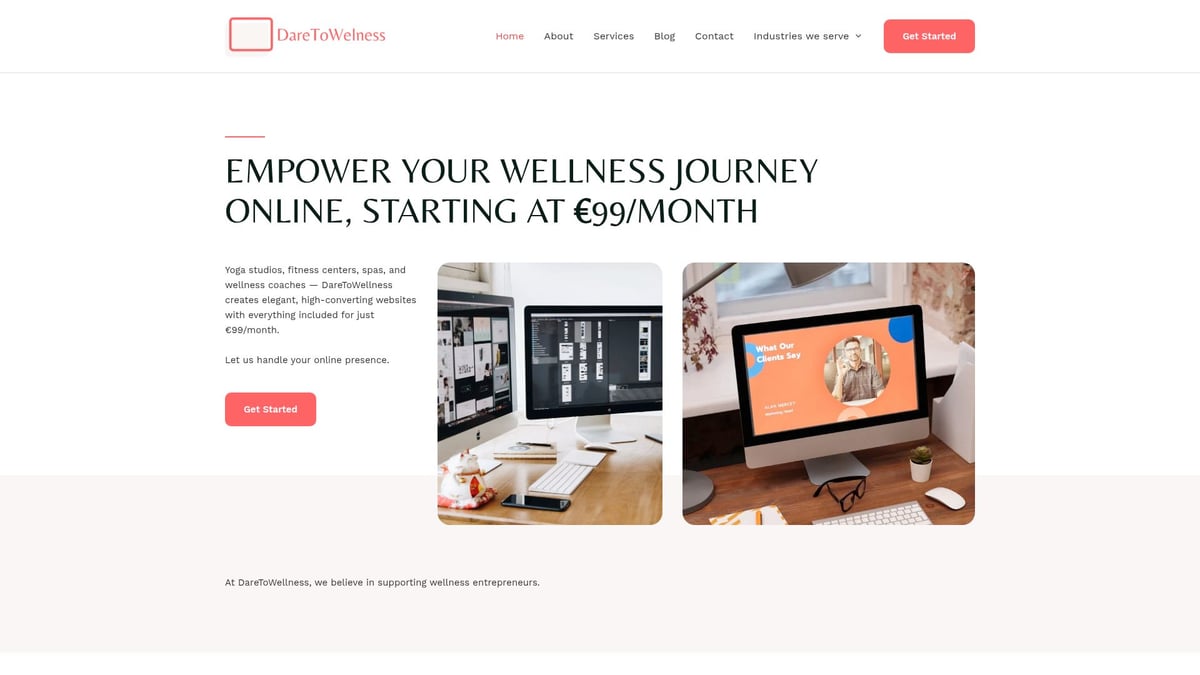
DareToWellness stands out with tailored website maintenance packages designed for yoga studios, fitness centers, spas, and wellness coaches. Their all-inclusive plans handle technical updates, security, local SEO, and content changes—all for one monthly fee. This industry-specific focus means clients benefit from best practices unique to the wellness sector, freeing them to focus on their core business. Entrepreneurs in this space report improved performance and fewer technical issues thanks to DareToWellness. Starting at €99 per month, their website maintenance services make professional management accessible to small businesses.
Questions to Ask Before Signing Up
Before committing to a website maintenance partner, ask the right questions to ensure alignment. What exactly is included in the maintenance plan? How are emergencies or downtime handled? Will you receive proactive communication and regular reports? Can the provider scale services as your business grows? These questions clarify expectations and help you avoid pitfalls. Businesses with dedicated support and clear processes experience 30% fewer critical incidents, making this diligence essential for long-term stability and trust.
Taking care of your website isn't just about ticking boxes—it's about protecting your reputation, keeping your business running smoothly, and making sure every visitor gets the experience they deserve. We’ve explored why regular maintenance, security, and fresh content are crucial for your wellness business’s success in 2026. If you’d like to spend less time worrying about technical issues and more time focusing on your clients, let us help you keep your site healthy and high performing all year long. Ready to take the next step? Work with us now