
In 2026, understanding website price is more crucial than ever as costs grow increasingly complex and competitive. A professional online presence is essential, but many businesses stumble over confusing quotes and hidden charges.
This guide will demystify the website price landscape, revealing pricing models, cost breakdowns, and practical budgeting tips. You will learn how to spot common pitfalls and avoid unexpected fees.
Ready to maximize the value of your investment? Explore expert strategies ahead and navigate every website price decision with confidence.
Understanding Website Pricing in 2026
Navigating the world of website price in 2026 requires more than a quick Google search. The landscape is shaped by rapid technological change, evolving business needs, and a host of pricing models that can make budgeting feel overwhelming. Let us break down what truly drives costs, so you can approach your next website project with clarity.
The Evolving Landscape of Website Costs
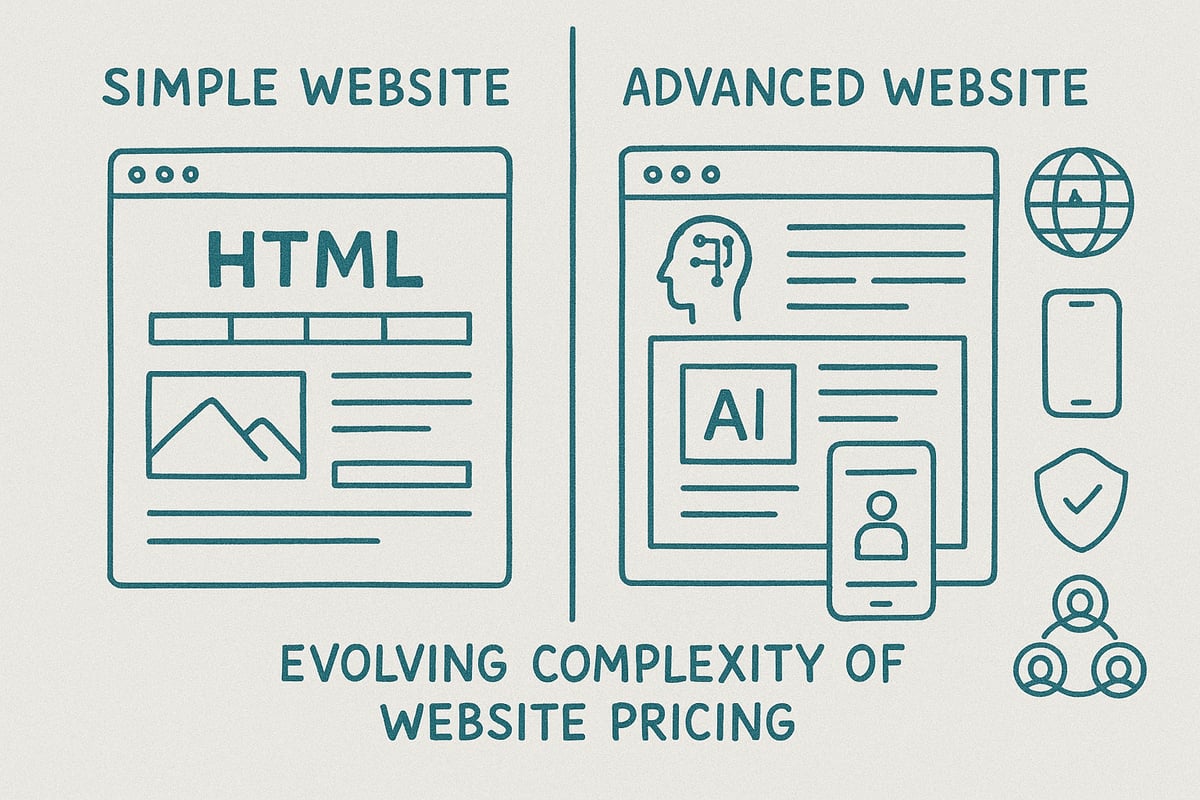
In 2026, the website price landscape reflects a mix of innovation and rising standards. Modern sites demand mobile optimization and ADA compliance, both of which add layers of complexity and cost. Advances in AI-driven tools and automation are transforming how sites are built, reducing manual labor but introducing new features that influence website price.
Consider the difference between a basic HTML site and a dynamic, AI-enhanced platform. While a simple site might cost $2,500, a fully featured, AI-powered solution can exceed $30,000 (WebsiteBuilderExpert, 2024). This broad range highlights how global talent pools and remote work continue to expand options, leading to even greater price variability.
As technology evolves, so does consumer expectation, making it essential to understand what you are paying for and how each trend impacts your website price.
Key Pricing Models: Fixed, Hourly, Subscription, and Hybrid
Understanding website price begins with knowing how providers structure their fees. The four main models are:
- Fixed pricing: A set fee for a defined project scope, ideal for clear requirements but less flexible for changes.
- Hourly pricing: Charges based on time spent, allowing flexibility but risking budget overruns if the scope expands.
- Subscription (SaaS): Ongoing monthly fees for bundled design, hosting, and support. This model is increasingly popular in 2026 for its predictability.
- Hybrid: Combines upfront project fees with recurring maintenance costs.
For example, a $5,000 fixed project vs. a $99/month subscription over three years results in similar totals, but the latter includes continuous updates and support. Subscriptions are gaining traction as businesses prioritize long-term value and ongoing optimization in their website price calculations.
Factors That Influence Website Price
Many elements contribute to your final website price. The scope—number of pages, required features, and third-party integrations—plays a major role. Custom design offers a unique brand presence but costs more than templates. E-commerce capabilities, secure payment gateways, and robust hosting also drive up expenses.
Security, ongoing support, and compliance requirements should never be overlooked. For instance, adding a booking system can increase website price by 15 to 25 percent. According to Clutch (2025), 70 percent of businesses now opt for custom features. For a deeper dive into essential features and their impact on cost, explore Functional website essentials.
Common Pricing Pitfalls and Hidden Fees
Unclear project scopes can quickly derail your website price expectations. Scope creep often leads to higher bills as new requirements surface. Hidden costs such as SSL certificates, premium plugins, and stock images are frequently omitted from initial quotes. Maintenance and update fees, along with migration and backup costs, can add up significantly.
Transparency is critical to avoid budget overruns. Many businesses encounter an extra $1,000 per year in unanticipated costs for "optional" extras. Always ask for a detailed breakdown to ensure your website price reflects the true investment required.
Market Trends: What’s New in 2026
AI and automation are reducing manual development costs, while "website as a service" (WaaS) models are reshaping how businesses approach their website price. Accessibility and privacy compliance are now standard requirements, further influencing what you pay.
In 2026, 40 percent of new sites use AI content tools (Statista, 2025), showing how quickly the market is shifting. Staying informed about these trends helps you negotiate smarter deals and ensures your website price aligns with current standards and expectations.
Step-by-Step Guide: How to Budget for a Website Project
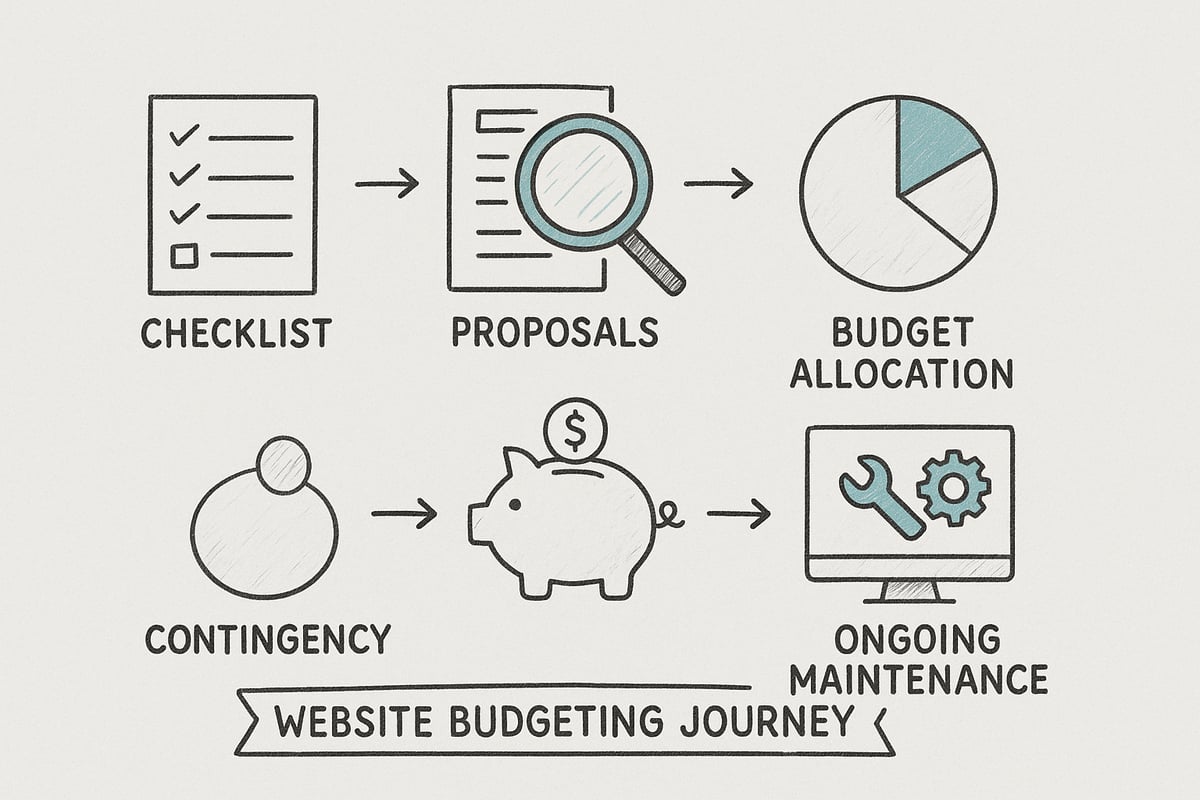
Budgeting for a website project in 2026 requires a clear, organized approach. By following these steps, you can ensure every dollar is allocated wisely and avoid any surprises with your website price. Let’s break down the process into actionable steps that set you up for success.
Step 1: Define Your Website Goals and Requirements
Start by identifying exactly what your website needs to achieve. Is your primary focus lead generation, e-commerce, or building brand credibility? Make a list of must-have features, such as booking systems, blogs, or membership portals, and separate them from nice-to-haves.
For example, a wellness studio may prioritize a booking calendar, an informative blog, and a membership section. Being specific with your requirements helps you avoid unnecessary expenses and makes your website price more predictable. Clear goals allow you to communicate your vision and prevent overpaying for features you will not use.
Step 2: Research and Shortlist Providers
Next, research the types of providers available for your project. Options include freelancers, agencies, or specialized firms, each offering different levels of expertise and support. Review portfolios and client testimonials to gauge the quality of their work.
For instance, compare an agency’s track record with a freelancer’s flexibility for a fitness website. According to industry data, 60% of small and medium businesses prefer agencies for reliability. By thoroughly vetting providers, you can find the right fit and keep your website price aligned with your expectations.
Step 3: Request Detailed Proposals and Quotes
Once you have a shortlist, prepare a clear Request for Proposal (RFP) outlining your project’s needs. Ask for detailed quotes that specify the scope, timeline, and deliverables. This makes it easier to compare options side by side.
For example, analyze three proposals for a spa website to see what each includes. A transparent quote helps you avoid misunderstandings and ensures your website price reflects the full project requirements. Always request clarification if something is unclear to prevent hidden fees later.
Step 4: Allocate Budget for Design, Development, and Extras
Divide your budget into main categories: design (around 30%), development (about 40%), and extras (the remaining 30%). Consider costs for content creation, SEO, and needed integrations. Prioritize features based on their return on investment.
Adding multilingual support, for example, may increase your website price by 20%, but can expand your audience significantly. Use a simple table to outline your allocations:
| Category | Estimated % of Budget |
|---|---|
| Design | 30% |
| Development | 40% |
| Extras/Content | 30% |
This structure ensures you stay focused on value rather than just the bottom line.
Step 5: Plan for Ongoing Maintenance and Future Scaling
After launch, ongoing updates, security patches, and backups become essential. Estimate your monthly or annual maintenance costs, which can range from $50 to $500 per month depending on complexity and support needs.
For more on support options and cost planning, see Website maintenance and support services. About 80% of websites require quarterly updates, so factoring this into your website price prevents disruptions and costly emergencies. Planning for future scaling, such as increased traffic or new features, ensures your site remains effective as your business grows.
Step 6: Set Aside a Contingency Fund
Unexpected expenses are common in any digital project. Set aside 10–20% of your total website price as a contingency fund to handle last-minute changes, compliance updates, or urgent bug fixes.
For example, a sudden need for a new integration or rapid feature rollout could arise. Having a buffer in your budget ensures the project stays on track and is completed without delays. This final step provides peace of mind and financial flexibility as your website evolves.
Comprehensive Breakdown: Website Cost Components in 2026
Understanding the website price in 2026 means looking beyond a single quote. Each aspect of your site adds unique value and cost. Let’s break down every major component so you can budget with confidence and avoid surprise expenses.
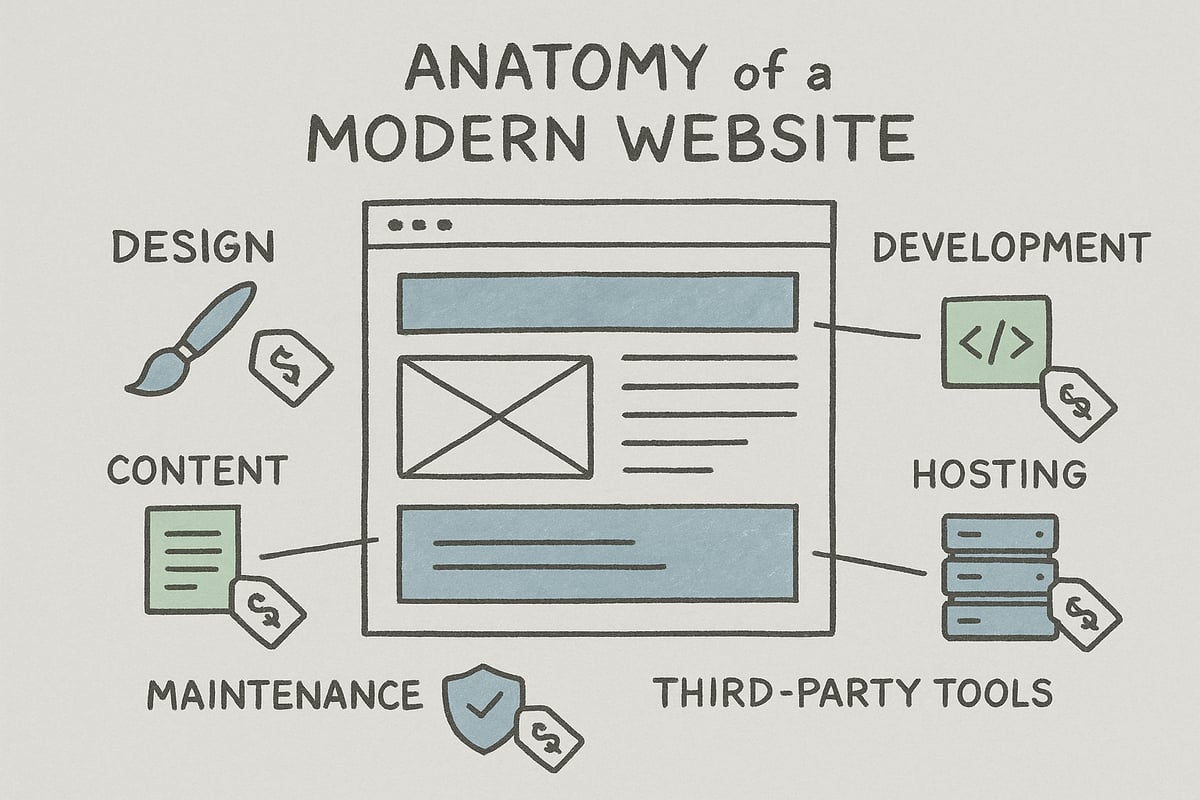
Design and User Experience (UX)
The design and user experience of your website set the first impression. Choosing between a custom design or a template is a major website price factor. Custom designs involve branding, color schemes, and UX research, adding a tailored feel but also increasing cost.
For example, a yoga studio opting for a custom branding package can expect to pay 25 to 40 percent more than using a template. UX testing, wireframes, and interactive prototypes are often included in these costs.
Table: Design Cost Comparison
| Option | Typical Cost | % of Total Website Price |
|---|---|---|
| Template Design | $500–$2,000 | 10–20% |
| Custom Design | $2,000–$8,000 | 25–40% |
A well-designed site enhances usability and conversion, justifying its impact on the website price.
Development and Functionality
Development covers both the frontend (what users see) and backend (the engine behind the scenes). The more features and integrations you require, the higher the website price.
For instance, adding an online payment system can raise your costs by $500 to $2,000. Integrating booking, CRM, or e-commerce will also affect the final quote. Each custom feature adds complexity, increasing development hours.
When planning, consider which functionalities are essential versus optional. Prioritizing must-haves ensures your website price aligns with your goals.
Content Creation and SEO
Content is at the heart of your digital presence. Professional copywriting, photography, and video production all contribute to the website price.
SEO optimization is equally vital. On-page SEO, technical improvements, and local targeting are commonly bundled into content packages. For example, a wellness coach adding SEO to their site may see the website price increase by $1,000 or more.
According to HubSpot, 65 percent of website projects now include professional copywriting. Investing in content and SEO supports visibility and long-term ROI.
Hosting, Domain, and Security
Securing your online presence starts with reliable hosting and domain registration. These recurring costs are integral to your website price.
Hosting options range from shared ($10/month) to cloud or dedicated solutions ($100+/month). Domains typically cost $10 to $50 per year. SSL certificates, vital for security and privacy compliance, can add $50 to $200 annually.
For example, a secure spa website may spend $20 to $100 monthly for premium hosting. Reliable infrastructure protects both your investment and client data, directly impacting your website price.
Maintenance, Updates, and Support
A website is not a one-time project. Ongoing maintenance, updates, and technical support are key parts of the website price. Most businesses opt for monthly support plans, which cover software updates, backups, and security monitoring.
Maintenance packages range from $50 to $500 per month, depending on complexity and responsiveness. Choosing all-inclusive care provides peace of mind and often reduces long-term costs.
For a deeper look at services and pricing, see Best website maintenance services for detailed breakdowns and options.
Licensing and Third-Party Tools
Many sites rely on premium plugins, themes, or SaaS integrations. These recurring costs are easy to overlook but can significantly affect your website price.
A fitness center, for example, may need booking plugin licenses, membership management tools, or analytics add-ons. Each license can add $50 to $500 per year to your total cost.
Track all subscriptions and renewals to avoid budget creep. Factoring these into your website price ensures no surprises later.
Comparing Website Solutions: DIY, Freelancers, Agencies, and Subscription Services
Choosing the right approach for your website project is a crucial decision that directly impacts your website price, quality, and long-term success. In 2026, businesses face a variety of options, each with unique advantages, limitations, and cost structures. Let’s break down the four primary solutions, so you can confidently align your investment with your goals.
DIY Website Builders: Pros, Cons, and Costs
DIY website builders like Wix, Squarespace, and WordPress.com have made it easier than ever to launch a site quickly. With user-friendly drag-and-drop interfaces, you can build a basic online presence for a low monthly fee. The average website price is typically under $50 per month, making this solution attractive for startups and small businesses with simple needs.
However, DIY builders have limitations. Customization is restricted, scalability can be challenging, and support is often limited to online forums or chatbots. If you need advanced features or a truly unique design, you may face higher costs or technical barriers. For a deeper look at how builder costs stack up, see this Website Builder Cost Comparison 2026.
Freelancers: Flexibility and Expertise
Hiring a freelancer offers a balance between affordability and expertise. Freelancers typically charge by the hour or project, with rates ranging from $30 to $150 per hour. This option works well if you have a clear vision and need custom features, but want to keep your website price manageable.
You benefit from personalized service and flexibility, but there are trade-offs. Support may be less reliable, and timelines can vary depending on the freelancer’s workload. Due diligence is essential—review portfolios and check references to ensure quality results. For complex projects, unexpected costs may arise, so get a detailed quote upfront.
Agencies: Full-Service and Scalability
Agencies provide comprehensive solutions, including strategy, design, development, and ongoing support. This approach delivers robust project management and access to a team of specialists. The website price for agency projects starts at $5,000 and can scale much higher based on complexity and features.
The main benefit is peace of mind—agencies handle every aspect, from initial planning to launch and maintenance. However, this comes at a premium, and communication is often more formal. For businesses seeking reliability and scalability, agencies are a strong choice. For a detailed breakdown of agency costs, visit the Web Development Cost in 2026 guide.
Subscription and “Website as a Service” (WaaS) Models
Subscription-based solutions bundle design, hosting, maintenance, and support into a predictable monthly fee. This model is gaining traction among small businesses seeking simplicity and transparency. Typical packages start at around €99 per month, covering all essentials and removing hidden fees from the website price.
The main advantage is that you avoid large upfront costs and benefit from continuous updates and support. However, customization may be limited to what the provider offers, and switching providers can be challenging. Subscription models are ideal for owners who want to focus on their business rather than website management.
DareToWellness: Specialized Wellness Website Solutions
DareToWellness stands out by offering elegant, high-converting websites tailored for wellness businesses at a fixed €99 per month website price. Their all-inclusive packages cover design, maintenance, optimization, and support, eliminating technical headaches and hidden costs.
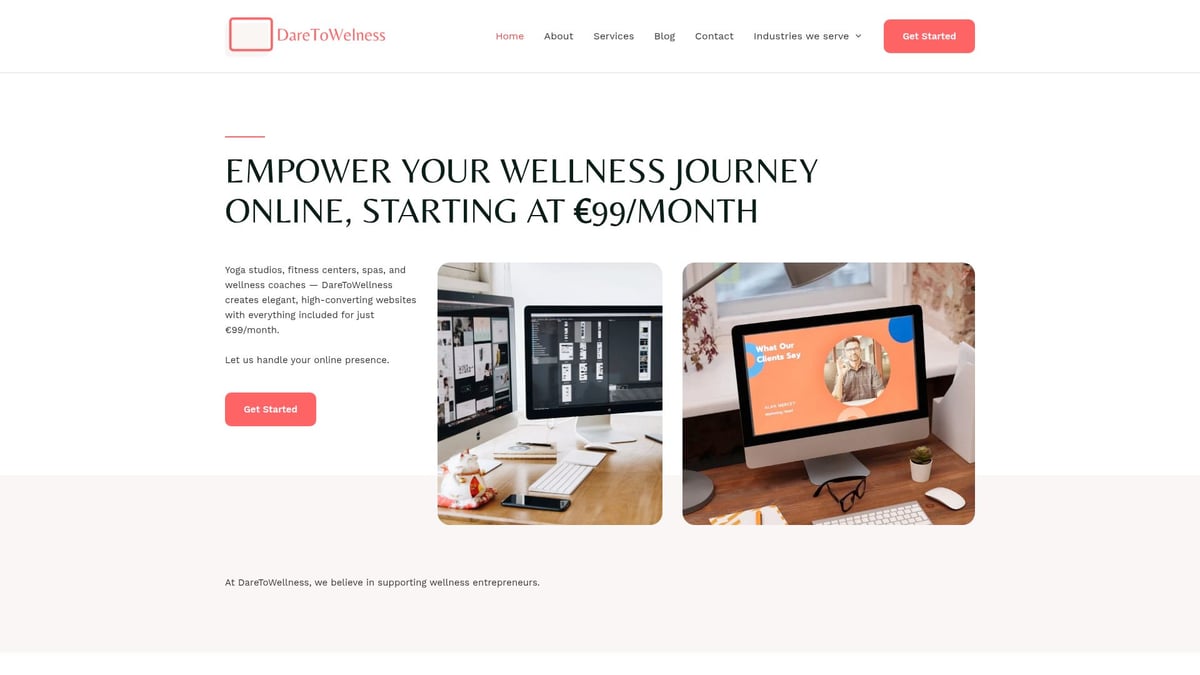
Whether you run a yoga studio, spa, fitness center, or coach clients, DareToWellness ensures compliance, security, and conversion-focused features. Their industry expertise lets you focus on your core services, confident that your online presence is maximizing value for your investment.
Quick Comparison Table
| Solution | Typical Website Price | Support | Customization | Best For |
|---|---|---|---|---|
| DIY Builder | $10–$50/month | Limited | Low–Medium | Simple, low-budget |
| Freelancer | $1,000–$8,000/project | Variable | High | Custom, moderate budget |
| Agency | $5,000–$30,000+ | Robust | Very High | Scalable, full-service |
| Subscription/WaaS | €99–€250/month | Ongoing | Medium–High | Predictable, hands-off |
Understanding these options is the key to finding the right website price and solution for your business. Evaluate your goals, budget, and desired level of involvement to make a well-informed choice.
How to Maximize Value and Avoid Overpaying
Maximizing your website price investment in 2026 requires a smart, strategic approach at every project stage. With costs rising and options multiplying, it is crucial to make informed decisions, avoid common pitfalls, and ensure your budget delivers long-term results. Here is how to get the most value for every euro you spend.
Negotiating with Providers: Tips and Best Practices
Effective negotiation is essential for optimizing your website price. Start by gathering multiple detailed quotes for direct comparison. Look beyond the bottom line—evaluate what is included, such as support, maintenance, and updates.
Use these negotiation tactics:
- Ask about bundling services for a better rate.
- Inquire about flexible payment schedules.
- Clarify scope to avoid later disputes.
For example, negotiating a maintenance package alongside your build can secure a discount and simplify future costs. Clear communication and transparency with your provider are the best defense against budget surprises. Remember, the more you know about the website price landscape, the more confident you will be at the table.
Prioritizing Features for ROI
To get the best website price, focus on features that drive business outcomes. List your must-haves—such as a booking system for a spa or e-commerce for a fitness studio—then identify optional elements that can wait.
Ask yourself: Which features will boost leads, sales, or customer engagement? For example, investing in a robust booking platform usually offers higher returns than flashy animations.
Prioritizing ROI means allocating your budget where it matters most. This approach prevents overspending on low-impact features and ensures your website price delivers measurable value.
Leveraging Bundled and All-Inclusive Packages
Bundled packages can simplify budgeting and maximize your website price investment. All-in-one solutions often include design, hosting, ongoing support, and updates for a predictable monthly fee.
For instance, many wellness businesses save up to 25% by choosing bundled solutions over à la carte pricing. By opting for a comprehensive package, you reduce the risk of missing critical components or being hit with surprise charges.
Explore High-converting websites strategies for insights on packages that deliver strong ROI and streamline your project from start to finish.
Avoiding Common Overpayment Traps
Many businesses overpay on website price due to hidden fees and unnecessary add-ons. Watch for upsells like premium plugins or exclusive features that duplicate existing solutions.
Avoid vendor lock-in with proprietary platforms that make future changes costly. Read every contract carefully and ask clarifying questions about recurring fees.
For example, paying extra for features already included elsewhere can inflate your website price without adding value. Vigilance and due diligence are your best protection against overpayment.
Evaluating Long-Term Costs and Scalability
A competitive website price today does not guarantee affordability tomorrow. Project your expenses over three to five years, considering maintenance, hosting upgrades, and new feature integration.
Growth often brings new needs: higher traffic, additional locations, or advanced analytics. For instance, upgrading your hosting or adding e-commerce can significantly impact your budget.
According to Web Development Industry Statistics 2026, half of businesses underestimate scaling costs. Anticipating these changes ensures your website price remains sustainable as you grow.
Monitoring Performance and ROI Post-Launch
Your website price should keep delivering value long after launch. Track performance using analytics tools to monitor conversions, uptime, and user engagement.
Schedule regular reviews, such as quarterly SEO and UX audits, to identify areas for improvement. For example, a simple audit can reveal opportunities to boost conversions or streamline user journeys.
Ongoing optimization ensures your website price continues to pay off, turning your investment into a lasting business asset.
Now that you have a clear picture of what drives website costs in 2026 and how to avoid common pitfalls, you’re ready to make informed choices that truly support your wellness business. With so much complexity in pricing models, ongoing maintenance, and ever-evolving design trends, having an expert partner can make all the difference. If you want a stress-free, all-inclusive solution tailored to your unique needs—so you can focus on serving your clients, not troubleshooting your site—let’s connect.
Work with us now
and start building a website that’s as effective and inspiring as your wellness mission.